
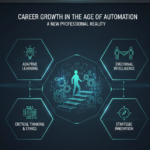
The Adaptive Advantage: Redefining Talent in the AI-Driven Startup Economy
The traditional career ladder has collapsed. In its place, a complex, multidimensional lattice has emerged—one where the rungs are not defined by tenure or job titles, but by the fluidity of your skills.
For decades, the narrative sold to professionals was linear: Pick a lane, specialize deeply, and ride that expertise to retirement. But as we navigate the volatile waters of 2026, that advice has become not just outdated, but dangerous. In the high-velocity ecosystem of startups and disruptive technology, the specialist is vulnerable. The future belongs to the adaptive generalist.
At the intersection of News, Startups, and Technology, a quiet revolution is happening. It isn’t being televised, but it is being coded, deployed, and scaled. This is the story of the Skill Shift, and why the “safe” career path is now the riskiest one you can take.
The Obsolescence Engine: Why Degrees Are Devalued
To understand where we are going, we must look at the brutal mathematics of the tech industry. The half-life of a learned professional skill has dropped to approximately two to five years.
Consider a computer science graduate who mastered the dominant frameworks of 2020. By 2026, without aggressive upskilling, their toolkit is legacy code. The tools that startups use to build unicorns—generative AI integration, autonomous agents, decentralized finance protocols—didn’t exist in the syllabus of yesterday.
Top-tier agencies and recruitment firms are seeing a massive shift in hiring criteria. The prestigious degree from an Ivy League university is no longer the golden ticket; it is merely a ticket to the queue. The real differentiator is velocity of learning.
Founders are asking a new set of questions:
-
Not: “What did you learn four years ago?”
-
But: “What have you unlearned in the last six months?”
The Rise of the “Full-Stack” Human
In the startup world, resources are scarce and time is the enemy. This pressure cooker environment has birthed a demand for the “Full-Stack Human”—a professional who combines technical literacy with emotional intelligence and business acumen.
This is distinct from the “Jack of all trades, master of none.” This is the Polymath.
A Polymath in 2026 might be a marketer who can write Python scripts to automate data scraping. Or a designer who understands the psychology of sales funnels. Or a CTO who can pitch to investors with the eloquence of a seasoned salesperson.
Why Startups Crave Polymaths
-
Cognitive Flexibility: They can switch contexts rapidly, moving from product development to customer support without friction.
-
Cost Efficiency: One adaptive employee can often cover the ground of three specialists during the early stages of a venture.
-
Innovation Synthesis: Innovation rarely happens in silos. It happens at the intersections. The employee who understands both the code and the customer is the one who spots the breakthrough.
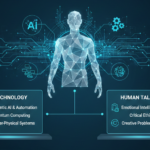
Technology: The Great Equalizer
For years, the headlines screamed that AI would take our jobs. Now that the dust has settled on the initial AI hype cycle, the reality is more nuanced. Technology hasn’t replaced the need for human input; it has raised the bar for it.
Success stories in the current market are defined by symbiosis. The most successful writers are those who use AI to accelerate research, not replace their voice. The most successful developers are those who use AI copilots to write boilerplate code, freeing their minds for complex architectural decisions.
However, this creates a filter. The gap between the “tech-literate” and the “tech-native” is widening.
-
The Tech-Literate: Uses tools as prescribed.
-
The Tech-Native: Hacks tools to create new workflows.
In this landscape, “prompt engineering” is just the tip of the iceberg. The real skill is System Thinking—understanding how AI agents, databases, and human interfaces interact to create value.
The New Resume: Proof of Work
If degrees are fading in relevance, what replaces them? Proof of Work.
Agencies like Write Right and Das Writing Services have long championed the power of the portfolio, but now this concept extends to every industry.
-
For Developers: It’s your GitHub contribution graph, not your GPA.
-
For Marketers: It’s the case studies of campaigns you ran, detailed in “Success Stories” on LinkedIn.
-
For Leaders: It’s your digital footprint—guest posts, thought leadership articles, and the community you build.
Recruiters are increasingly looking for “artifacts of ambition.” Did you build a side project? Did you document your learning journey in a blog? Did you contribute to open-source software? These artifacts prove curiosity, a trait that cannot be faked.
Strategic Upskilling: What to Learn Now
If you are looking to future-proof your career, do not just chase the latest programming language. Languages change. Instead, focus on Meta-Skills—skills that enable you to acquire other skills.
1. Data Storytelling
Data is the oil of the digital economy, but it is useless without refinement. The ability to look at a spreadsheet, extract the narrative, and communicate it to stakeholders is invaluable. This bridges the gap between the technical and the strategic.
2. Emotional Intelligence (EQ) in Remote Teams
As remote and hybrid work becomes the standard for startups, EQ becomes a hard skill. How do you build culture over Zoom? How do you manage conflict via Slack? Leaders who can navigate the nuances of digital communication are commanding premium salaries.
3. No-Code/Low-Code Fluency
You don’t need to be a software engineer to build software anymore. Platforms like Webflow, Bubble, and Zapier allow marketers and founders to prototype ideas instantly. Mastery of these tools allows you to bypass the “IT bottleneck” and execute at the speed of thought.
Navigating the Pivot: A Case for Resilience
Let’s look at the anatomy of a modern career pivot.
-
The Scenario: A traditional journalist sees the industry shrinking.
-
The Pivot: Instead of fighting for the few remaining traditional roles, they learn SEO and Content Strategy. They don’t just write; they optimize. They understand user intent.
-
The Result: They become a Head of Content for a SaaS startup, earning triple their previous salary while using the same core talent (writing) in a new context.
This isn’t a fantasy. This is the standard trajectory for those who embrace the skill shift. The key is to detach your identity from your job title and attach it to your ability to solve problems.
The Leadership Imperative
For C-suite leaders and founders, the challenge is twofold: You must upskill yourself while creating a culture that encourages upskillng in others.
The old model of “command and control” is dead. The new model is “servant leadership with a digital edge.” Leaders must be the Chief Learning Officers of their own lives. If the CEO isn’t experimenting with new tech, why should the team?
Featured Success Stories often highlight leaders who admitted what they didn’t know. Vulnerability is a strength. Admitting that “I don’t know how this AI tool works, let’s learn it together” builds more trust than feigning omniscience.