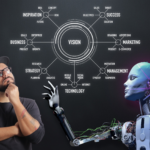

The era of the “lone wolf” developer—the genius in the hoodie who creates magic in a dark room but refuses to speak to the marketing team—is officially over.
For decades, the tech industry operated on a binary hierarchy: hard skills (coding, architecture, system design) were the currency of value, while soft skills (communication, empathy, negotiation) were viewed as “nice-to-haves.” They were the garnish, not the steak.
But as we settle into 2026, the paradigm has shifted violently. With Generative AI handling syntax and boilerplate code with increasing proficiency, technical competence is no longer the differentiator—it is the baseline.
Today, the most dangerous gap in the software industry isn’t a lack of Python proficiency; it is a lack of people proficiency. Here is why soft skills have officially graduated to become the “new hard skills” of the technology sector.
1. The Commoditization of Syntax
Let’s address the elephant in the server room: AI.
Tools like GitHub Copilot and ChatGPT have democratized code generation. If you ask a junior developer and an AI to write a standard API integration, the output might be negligible in difference. However, the value of a developer is no longer defined by how fast they can type syntax.
Value is now defined by:
-
Problem Formulation: Knowing what to build, not just how to build it.
-
Contextual Understanding: deciphering vague business requirements and translating them into technical logic.
-
Ethical Oversight: Understanding the implications of the code being deployed.
Hard skills build the product; soft skills build the right product. In a world where “how” is automated, “why” becomes premium.
2. The Communication Bridge: Translating Geek to Human
Have you ever witnessed a project fail not because the code was buggy, but because the developers and the stakeholders were speaking different languages?
Premium agencies and successful startups now prize Translation as a top-tier skill. This is the ability to explain complex technical debt to a non-technical CEO without making their eyes glaze over. It is the ability to advocate for a refactor by explaining the ROI in business terms, not just engineering terms.
Agency Insight: The best engineers are not just code-architects; they are narrative-architects. They can tell the story of the data.
3. Empathy: The UX Superpower
We often mistake empathy for a purely social skill, but in tech, it is a functional requirement.
-
Empathy for the User: This leads to intuitive UI/UX. A developer with high EQ (Emotional Intelligence) anticipates user frustration before a line of code is written.
-
Empathy for the Team: This leads to maintainable code. “Clever” code that no one else can read is selfish. Empathetic code is clean, commented, and scalable because the writer respects the next developer who has to maintain it.
When you hire for empathy, you aren’t just getting a nicer office environment; you are getting a product that resonates more deeply with the market.
4. Adaptability: The Only Constant is Deprecation
In the fast-paced world of startups, the tech stack you love today might be obsolete next Tuesday.
Hard skills are rigid; they are specific to a language, a framework, or a tool. Soft skills—specifically adaptability and resilience—are fluid.
Recruiters at top-tier tech firms are increasingly ignoring the “Years of Experience in X Language” metric in favor of “Rate of Learning.” Can this person unlearn a legacy habit and relearn a new paradigm overnight? If the answer is yes, that is a soft skill that generates hard revenue.
5. Conflict Resolution: Debugging People
Code conflicts are easy to resolve; you compare branches and merge. People conflicts are messy.
In a high-stakes deployment environment, stress levels spike. Fingers get pointed. Egos get bruised. A senior engineer or a CTO who possesses the soft skill of Conflict Resolution acts as a stabilizer. They can de-escalate tension, facilitate a blameless post-mortem, and turn a failure into a learning module.
This “debugging of people” ensures that the team velocity remains high, even when morale is threatened.
6. The Startup Perspective: Why Culture Fit > LeetCode
We recently analyzed hiring trends across 50 high-growth startups. The consensus? They would rather hire a “Good” coder with “Excellent” communication skills than an “Excellent” coder with “Toxic” traits.
Why? Because a toxic genius creates a bottleneck. They hoard knowledge, refuse feedback, and eventually drive other talent away. In contrast, a collaborative developer acts as a force multiplier—they make everyone around them better.
The ROI of Soft Skills:
-
Reduced Churn: Teams with high psychological safety stay together longer.
-
Faster Iteration: Better communication leads to fewer misunderstandings and less rework.
-
Better Leadership: Today’s junior dev with high EQ is tomorrow’s VP of Engineering.
7. How to “Git Push” Your Soft Skills
If you are a developer looking to future-proof your career, here is your upgrade path:
-
Active Listening: Stop listening to reply; start listening to understand. In meetings, ask clarifying questions before proposing solutions.
-
Public Speaking: Join a local meetup or present at an internal “Lunch and Learn.” The ability to present ideas is as potent as the ability to execute them.
-
Cross-Functional Curiosity: Go have coffee with a designer or a salesperson. Understand their pain points. It will change how you code.
Conclusion: The Human Differentiator
We are moving “Beyond the Code.”
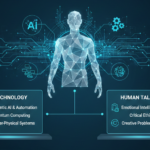
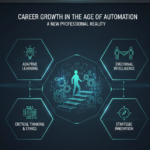
As we stand on the precipice of an AI-integrated future, the “Hard Skills” are being offloaded to machines. What remains—the creativity, the empathy, the strategic vision, and the ability to connect disparate dots—is uniquely human.
To the developers reading this: Keep sharpening your syntax. Keep learning new frameworks. But remember, your ceiling is no longer defined by your technical depth. It is defined by your human width.
Soft skills are no longer soft. They are the hardest skills to master, and the most profitable to possess.