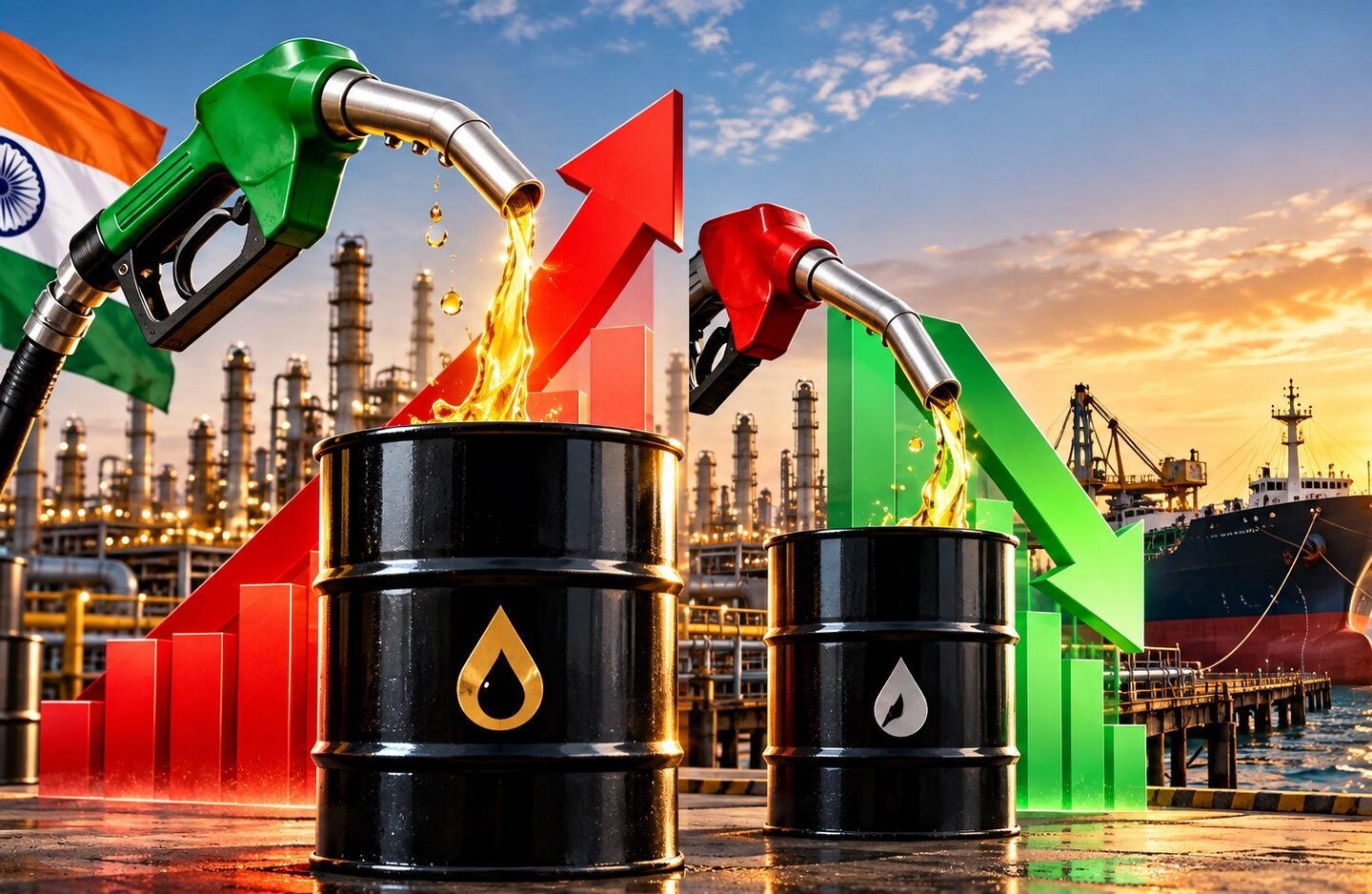



The Indian government has revised export duties on petrol and diesel, increasing the levy on petrol shipments fivefold while reducing the tax on diesel exports. The updated rates came into effect on October 16, 2026, as authorities continue to adjust fuel export taxes in response to changing international energy market conditions.
Under the revised structure, the export duty on petrol has increased from ₹0.50 per litre to ₹2.50 per litre. In contrast, the levy on diesel exports has been reduced from ₹16 per litre to ₹8.50 per litre.
The changes form part of the government’s periodic review of petroleum product export duties amid volatility in global crude oil prices and continuing geopolitical uncertainty in West Asia. <Cite refs={[“turn497481news14″,”turn497481search11″,”turn497481search12”]}/>
Key Changes in Petrol and Diesel Export Duties
The latest revision introduces different tax adjustments for the two major transportation fuels.
- Petrol exports: The duty has risen fivefold, from ₹0.50 to ₹2.50 per litre.
- Diesel exports: The levy has fallen from ₹16 to ₹8.50 per litre, a reduction of ₹7.50 per litre.
- Aviation turbine fuel (ATF): The export duty remains unchanged at ₹10.50 per litre.
The revised rates apply from October 16 for the current review period. The government has continued its practice of reassessing these levies at regular intervals based on movements in international fuel prices and market conditions. <Cite refs={[“turn497481news7″,”turn497481search1″,”turn497481search12”]}/>
Why Has the Government Changed Fuel Export Duties?
Export duties on petroleum products give the government a way to respond to changing price differences between domestic and international markets.
When global fuel prices rise, selling refined products overseas can become more attractive to refiners. Higher export earnings may encourage companies to direct more supplies towards international buyers, potentially creating pressure on domestic availability.
By adjusting export levies, the government can influence the economics of overseas sales while responding to market conditions. The latest revision increases the tax burden on petrol exports but reduces it for diesel, reflecting a different duty treatment for the two products.
The government has not provided a separate detailed explanation for the contrasting changes in the latest order. Therefore, the revisions should be understood primarily as part of its continuing review of fuel export taxation rather than as a confirmed indication of a specific supply shortage or pricing forecast. <Cite refs={[“turn497481search0″,”turn497481search1″,”turn497481search12”]}/>
How Will the Changes Affect Fuel Exporters?
The higher petrol export duty increases the tax payable on each litre of petrol shipped overseas. Depending on international prices, refining costs and commercial arrangements, this could reduce the net returns exporters receive from petrol sales.
The reduction in the diesel export levy, meanwhile, lowers the tax burden on diesel shipments. For exporters, the ₹7.50-per-litre reduction could improve export economics compared with the previous duty structure, although the overall impact will depend on global diesel prices, refining margins and other costs.
The differing rates may influence how refiners assess export opportunities across petroleum products. However, the actual effect on export volumes and profitability will become clearer as market conditions and trade data develop.
Will Petrol and Diesel Prices Fall in India?
A key point for consumers is that the revised duties apply to fuel exports, not directly to petrol and diesel sold in the domestic market.
The latest announcement does not, by itself, change the existing excise duty structure on petrol and diesel cleared for domestic consumption. As a result, consumers should not assume that petrol prices will rise or diesel prices will fall at fuel stations simply because the export duties have changed. <Cite refs={[“turn497481search1″,”turn497481search12″,”turn497481news7”]}/>
Retail fuel prices depend on several factors, including crude oil prices, refining and distribution costs, applicable domestic taxes, and pricing decisions by oil marketing companies. Any change in pump prices would need to be assessed separately from the export-duty announcement.
Why Are Fuel Export Taxes Reviewed Regularly?
International energy markets can change quickly because of geopolitical tensions, shifts in crude oil supply, demand fluctuations and changes in refinery margins.
India reviews export duties on petrol, diesel and aviation turbine fuel periodically, allowing the government to adjust rates as market conditions evolve. The export tax mechanism was reintroduced in 2026 amid elevated crude oil prices and tensions in West Asia, after an earlier period in which windfall taxes on fuel exports had been withdrawn. <Cite refs={[“turn497481search0″,”turn497481search11″,”turn497481search12”]}/>
These periodic revisions are relevant to refiners, fuel exporters, energy-market participants and policymakers monitoring domestic supply and international trade.
What Should Consumers and Businesses Watch Next?
The impact of the new rates will depend on how international fuel prices, export demand and refining margins evolve during the coming weeks.
Consumers should monitor official announcements concerning domestic fuel prices rather than interpreting export-duty revisions as an immediate pump-price change. Fuel exporters and energy companies, meanwhile, will need to assess the revised levies alongside global price movements and operating costs.
Further changes remain possible during subsequent reviews if market conditions shift.