
The Rise of the Generalist: Is Specialization Dead?
For decades, the corporate mantra was simple: Niche down.
We were told to pick a lane, deepen our expertise, and become the undisputed master of a singular domain. “Jack of all trades, master of none” was a warning, not a compliment.
But the tectonic plates of the global workforce are shifting. In an era defined by volatile markets, rapid AI integration, and the explosion of startup culture, the old rules no longer apply. The “master of one” is finding themselves isolated in a silo, while the agile, multi-skilled professional is thriving.
Welcome to the rise of the generalist.
The Death of the Industrial Assembly Line
To understand why specialization is losing its monopoly on success, we have to look at where it came from. The specialist model was a product of the Industrial Revolution—an assembly line mindset where efficiency came from repeating one specific task perfectly.
However, the modern economy is not an assembly line; it is a network.
Today, problems are rarely isolated to one department. A marketing problem is often a data problem. A product issue is often a user experience (UX) issue.
-
The Specialist sees the problem through a single lens.
-
The Generalist sees how the problem connects to the entire ecosystem.
Agency Insight: At premium firms, we notice that the highest-paid consultants aren’t just copywriters or just coders—they are strategists who understand how code, copy, and consumer psychology intersect.
Why Startups Are Fueling the Generalist Fire
If corporate giants were the home of the specialist, startups are the playground of the generalist.
In the high-stakes world of early-stage ventures, agility is the only currency that matters. A startup cannot afford to hire a separate SEO expert, a content writer, a social media manager, and a PR rep. They need one person who can write a blog at 9:00 AM, fix a CSS bug at 11:00 AM, and pitch to investors at 2:00 PM.
The rise of the generalist is directly tied to the need for:
-
Cost Efficiency: Doing more with fewer headcounts.
-
Agility: Pivoting strategies without firing the whole team.
-
Cross-Pollination: Applying insights from sales to improve product development.
The “T-Shaped” Professional: The New Gold Standard
Does this mean deep expertise is useless? Absolutely not. The binary choice between “Generalist” and “Specialist” is a false dichotomy.
The market is currently rewarding the T-Shaped Professional.
-
The Horizontal Bar: A broad understanding of many disciplines (Marketing, Tech, Finance, Ops).
-
The Vertical Bar: Deep expertise in one specific area.
This hybrid approach allows professionals to communicate across departments while still providing high-level value in their core domain. They are the translators of the business world, bridging the gap between the CTO and the CMO.
Technology and AI: The Ultimate Leveler
Here is the elephant in the room: Artificial Intelligence.
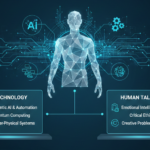
AI is, by definition, the ultimate specialist. It can crunch numbers faster than a mathematician and check code faster than a senior developer. If your entire value proposition is based on rote technical execution, you are at risk.
However, AI struggles with context.
-
It can write code, but it doesn’t know why that feature matters to the user.
-
It can generate data, but it cannot interpret the emotional nuance behind the numbers.
The rise of the generalist is a response to AI. As machines take over specialized tasks, humans must move up the value chain to become integrators—connecting the dots that the machines produce.
How to Pivot: Developing a Generalist Mindset
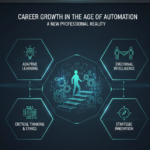
If you want to future-proof your career, you need to stop thinking in silos. Here is how to embrace the generalist revolution:
-
Cultivate Curiosity: Don’t just learn how to do your job; learn how your job affects the department next to you.
-
Learn the Language of Data: You don’t need to be a data scientist, but you must know how to read analytics to make informed decisions.
-
Embrace Soft Skills: Empathy, communication, and leadership are skills that are impossible to automate and essential for generalists.
-
Connect the Dots: Always ask, “How does this task impact the bigger picture?”