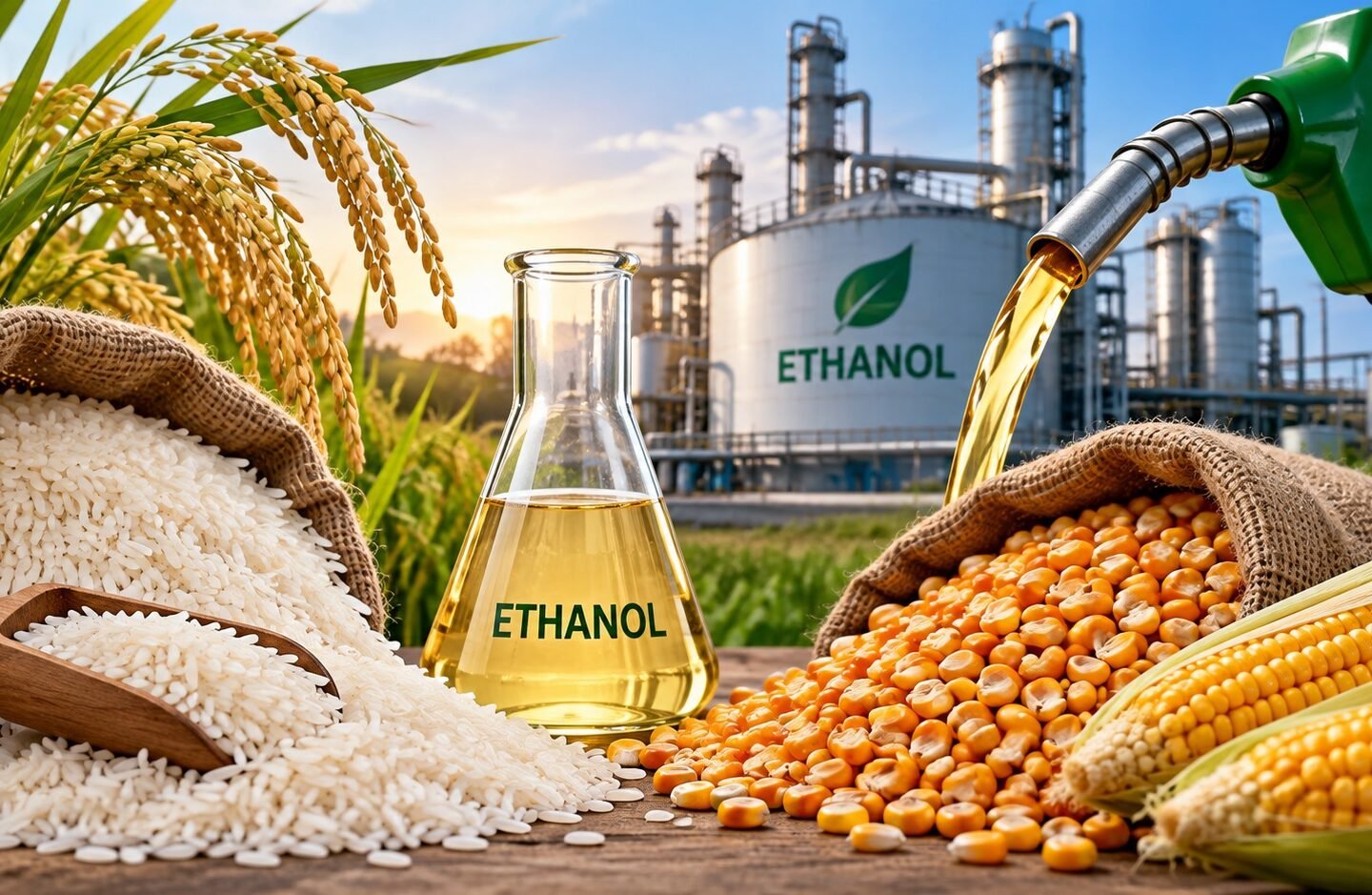



India’s Ethanol Tender Triggers Debate Over Rice and Maize Supply
India’s latest ethanol procurement tender for the 2026–27 supply year has sparked concerns among grain-based ethanol manufacturers over the growing role of rice and the future of maize as a key industrial feedstock.
The tender comes as the government seeks to protect domestic sugar supplies by restricting the use of sugarcane juice, sugar syrup and B-heavy molasses for ethanol production during the upcoming supply year. The policy shift is expected to increase the importance of grain-based alternatives, including surplus rice, damaged foodgrains and maize.
However, differences in procurement prices and allocation rules have raised questions about whether rice-based ethanol could receive an advantage over maize-based production, potentially affecting farmers, distilleries and industries that depend on maize.
According to industry representatives, the issue is not limited to ethanol manufacturing. It also has implications for agricultural markets, poultry feed costs and the availability of raw materials for food processing.
Why Rice Is Gaining Ground in Ethanol Production
The procurement framework allows ethanol manufacturers to use surplus rice supplied through the Food Corporation of India (FCI), subject to specified allocation limits. The tender sets the procurement price for ethanol produced from surplus foodgrains at ₹60.32 per litre, while ethanol made from damaged foodgrains is priced at ₹64 per litre.
Maize-based ethanol has a basic procurement price of ₹66 per litre, with an additional incentive of ₹2.79 per litre, bringing the effective rate to ₹68.79 per litre under the reported tender terms.
These differences in procurement prices, alongside feedstock availability and allocation priorities, are shaping the debate over which raw materials ethanol producers will prefer.
The Grain Ethanol Manufacturers Association (GEMA) has raised concerns that the procurement mechanism could favour lower-priced rice-based options, leaving maize producers with less certainty about future demand. The association has called for a more balanced framework that accounts for the economics of different feedstocks.
Maize Producers and Ethanol Manufacturers Face Uncertainty
Maize has become an important raw material for India’s grain-based ethanol industry. However, manufacturers are concerned that changes in procurement incentives and allocation procedures could affect the commercial viability of maize-based distilleries.
A predictable procurement policy is important for producers making investment decisions, purchasing grain and planning plant operations. If demand shifts significantly towards rice, maize-based ethanol manufacturers could face uncertainty over capacity utilisation and future returns.
At the same time, maize remains an essential agricultural commodity with demand extending beyond fuel production. Any major change in industrial consumption can influence market prices, farm incomes and the availability of supplies for other sectors.
The challenge for policymakers is to maintain a viable ethanol industry without creating unnecessary uncertainty for grain producers and manufacturers.
Poultry Feed and Food Industries Could Feel the Impact
The debate over ethanol feedstocks comes amid concerns about maize availability and rising demand from several industries.
Maize is widely used in poultry feed and is also an important input for starch manufacturing and food processing. Ethanol producers now compete with these industries for access to the same agricultural resource.
If ethanol demand absorbs a larger share of available maize, poultry farmers could face higher feed costs, potentially affecting the prices of eggs, chicken and other poultry products. Starch manufacturers and other industrial users may also experience pressure on raw-material procurement.
These risks become more significant when agricultural output is affected by unfavourable weather or when supplies tighten during periods of strong demand.
Rice-based ethanol could help diversify feedstock use, but its benefits will depend on the availability of eligible surplus stocks, procurement allocations and the economics of production.
Government Balances Energy Security With Food Availability
India’s ethanol-blending programme is intended to reduce dependence on imported crude oil, support domestic agricultural supply chains and diversify the country’s energy sources.
However, expanding grain-based ethanol production creates a policy challenge: agricultural commodities must serve multiple purposes, including food, animal feed and fuel.
The government’s restrictions on sugar-based ethanol for the 2026–27 supply year reflect a priority to safeguard domestic sugar availability. The resulting shift towards grain-based alternatives has made feedstock allocation and pricing more important than ever.
A balanced approach could involve greater transparency in procurement rules, predictable allocation mechanisms and pricing structures that reflect the cost of producing ethanol from different raw materials.
Such measures would help manufacturers plan operations while reducing the risk of excessive competition between the fuel, food and animal-feed industries.
What Lies Ahead for India’s Ethanol Industry?
The impact of the latest tender will depend on actual procurement allocations, the availability of surplus rice, maize production and the commercial decisions of ethanol manufacturers.
Industry participants are seeking greater clarity on how the available volumes will be distributed among different feedstocks. Meanwhile, poultry and food-processing businesses will be watching developments closely because changes in maize availability could affect their operating costs.
The coming supply year will therefore be an important test of India’s ability to expand ethanol production while maintaining a balance between energy requirements and agricultural demand.