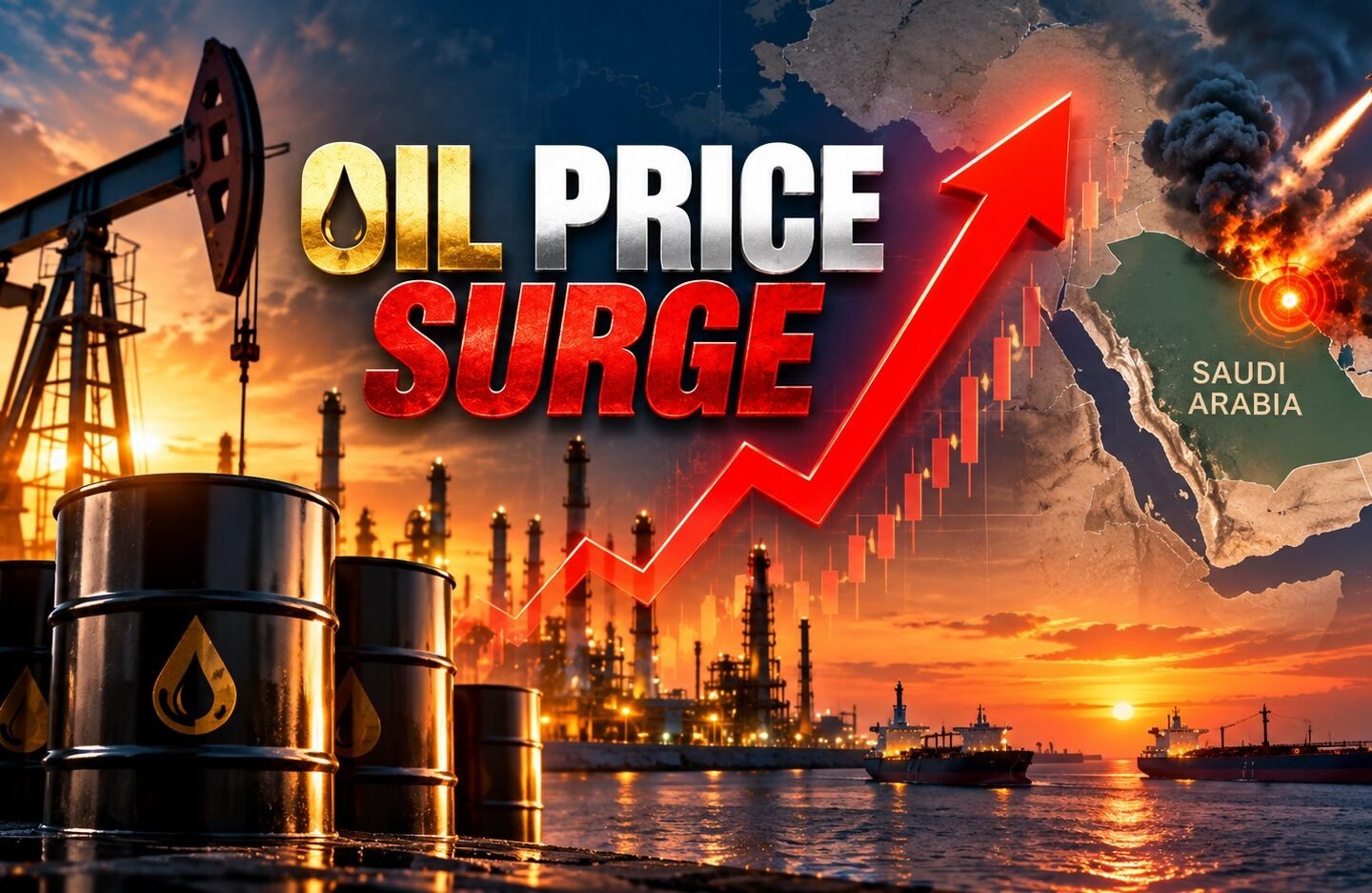



Global crude oil prices climbed to their highest levels in nearly six months on Friday as Houthi attacks on Saudi Arabia heightened concerns about potential disruptions to Middle East energy supplies. Rising geopolitical tensions, alongside fresh supply concerns elsewhere in the region, strengthened the rally in international oil markets.
Brent Crude Rises Above $116 a Barrel
The benchmark recorded its highest closing price since April 29. Meanwhile, US West Texas Intermediate (WTI) crude rose $3.80, or 3.8%, to settle at $103.27 per barrel. Brent gained approximately 6% over the week, reflecting growing concern among investors about the security of global oil supplies.
Houthi Attacks Increase Concerns Over Saudi Energy Infrastructure
The latest rise in oil prices follows attacks linked to Yemen’s Houthi movement targeting locations in Saudi Arabia. The developments have raised concerns about the safety of energy infrastructure and the potential impact on crude production, transportation and exports.
Saudi Arabia is one of the world’s most important oil producers, making the security of its energy facilities a major factor in global market stability. Any sustained disruption to production or export routes could tighten supplies and push prices higher.
Saudi Aramco reportedly ordered the evacuation of its headquarters in Dhahran as regional hostilities intensified, highlighting the growing security concerns surrounding the energy sector.
Middle East Tensions Add a Risk Premium to Oil
Oil prices are particularly sensitive to developments in the Middle East because the region plays a central role in global petroleum production and transportation. When conflict threatens oil fields, export terminals or shipping routes, traders often factor the possibility of future shortages into market prices.
Analysts have warned that a further escalation could cause renewed supply disruptions. Even if production and deliveries continue, uncertainty surrounding shipping security and transportation costs can keep prices elevated.
The market is also monitoring other supply-side developments. In Libya, a pipeline valve closure affecting flows from the Hamada and Tahara oilfields to the Zawiya port has reduced production, adding another potential constraint to global supply.
What Rising Crude Oil Prices Mean for India
Higher international crude oil prices are a significant concern for India, which relies heavily on imported oil to meet its energy needs. A sustained increase in crude prices can raise the country’s import bill, put pressure on the trade balance and contribute to inflation.
The impact can extend beyond petrol and diesel. Higher oil costs may increase transportation, manufacturing, logistics and agricultural expenses, potentially affecting household budgets and business operating costs.
For policymakers, the challenge is to manage inflationary pressure while balancing energy security, economic growth and domestic fuel-price considerations. The actual impact on consumers will depend on the duration of the price rally, currency movements, taxes, refining costs and domestic pricing decisions.
Will Oil Prices Continue to Rise?
The near-term direction of crude oil prices will depend largely on developments in the Middle East and whether the latest attacks lead to actual disruptions in production or shipments.
If tensions escalate and energy infrastructure or export routes are affected, prices could face further upward pressure. Conversely, any improvement in regional security, uninterrupted oil flows or weaker global demand could limit additional gains.
Investors will also watch production trends, shipping costs and supply developments in other oil-producing countries to assess whether the current rally can be sustained.