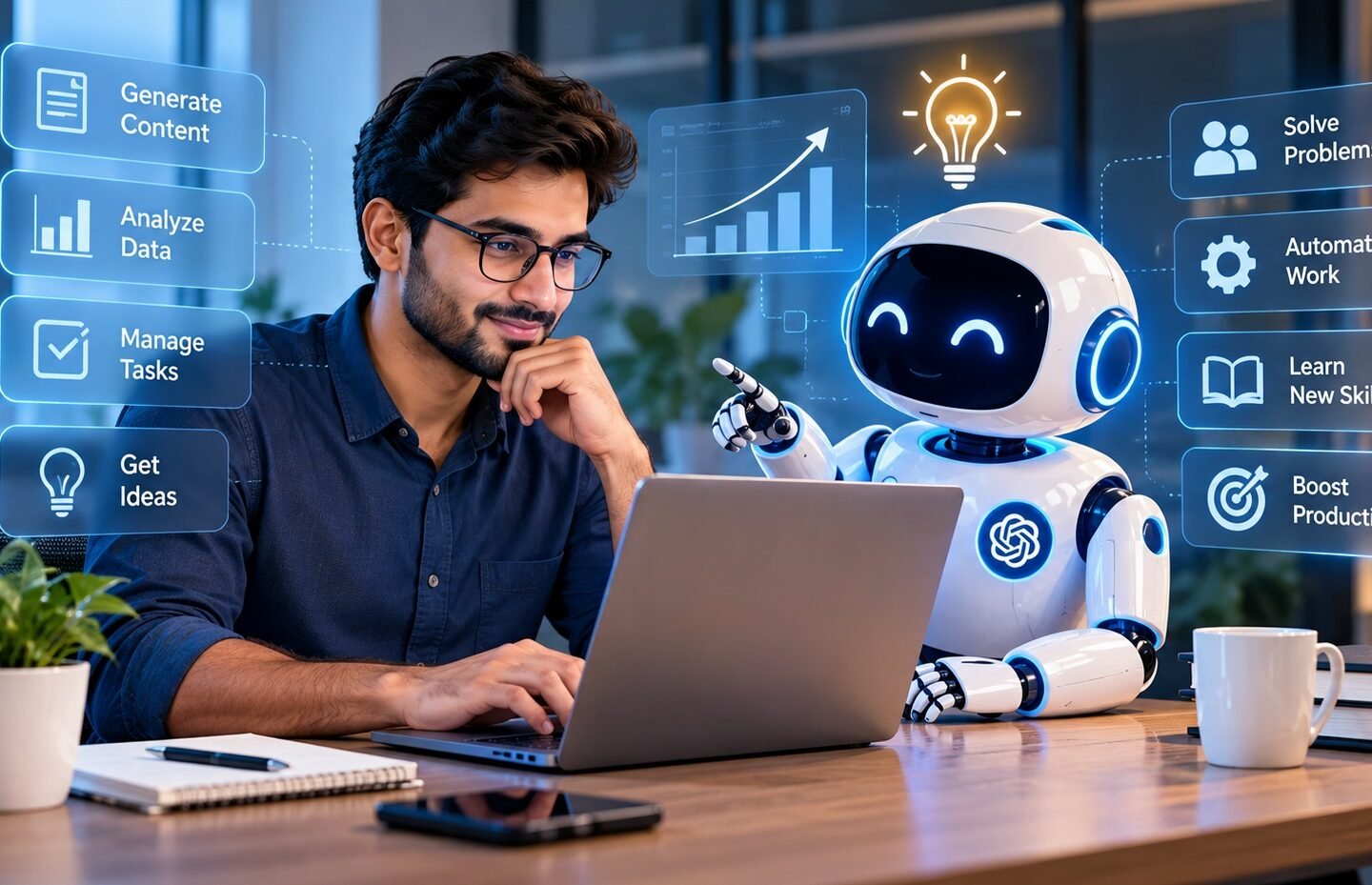



Artificial intelligence is changing the way people work, communicate, and solve problems. From writing content and managing projects to analyzing data and developing new business strategies, AI tools are becoming an important part of modern workplaces. However, the real value of artificial intelligence comes not just from using it, but from learning how to work with it effectively.
Building a strong working relationship with AI can help professionals improve productivity, enhance creativity, and make better use of their time. When people understand how to communicate with AI, provide clear instructions, and evaluate its responses, they can turn it into a valuable partner in their daily work.
Understanding the Role of AI in the Workplace
AI is designed to assist people with a wide range of professional tasks. It can generate ideas, summarize documents, draft emails, organize information, and help solve complex problems. These capabilities allow employees to focus more on strategic responsibilities rather than spending excessive time on repetitive activities.
For example, marketing professionals can use AI to develop campaign ideas, software developers can use it to explore coding solutions, and business owners can use it to prepare reports or research new opportunities.
Rather than replacing human expertise, AI can complement existing skills and help people work more efficiently.
Better Communication Leads to Better Results
One of the most important aspects of working with AI is learning how to communicate with it clearly. The quality of the output often depends on the instructions, context, and expectations provided by the user.
Instead of asking AI to complete a broad task, professionals can explain their objectives, target audience, preferred format, and specific requirements. This helps the technology generate responses that are more relevant and useful.
Users can also improve results by asking follow-up questions, requesting revisions, and providing feedback. Over time, this process helps them develop more effective ways to use AI in their daily responsibilities.
Improving Productivity and Saving Time
AI can reduce the time required to complete many routine workplace activities. Tasks such as drafting documents, preparing presentations, summarizing research, and organizing project information can often be completed more efficiently with AI assistance.
This does not mean that every task should be automated. Instead, professionals should identify activities where AI can provide meaningful support while leaving important decisions and quality checks to human experts.
By using AI strategically, employees can spend more time on creative thinking, customer relationships, planning, and other activities that require human judgment.
AI as a Partner in Creativity and Innovation
Creativity is another area where AI can make a significant difference. When professionals face a challenging problem or need fresh ideas, AI can suggest alternative approaches, identify possible opportunities, and help explore different perspectives.
Content creators can use AI to brainstorm article topics, designers can explore creative concepts, and entrepreneurs can evaluate potential business ideas.
AI-generated suggestions should be treated as starting points rather than finished solutions. Human experience, originality, and critical thinking remain essential for turning initial ideas into meaningful results.
Learning and Growing with AI
Building a relationship with AI also creates opportunities for continuous learning. Professionals can use AI to understand unfamiliar concepts, explore new technologies, practice communication skills, and receive explanations of complicated topics.
For example, employees learning a new software platform can ask AI for step-by-step guidance. Developers can use it to understand technical errors, while business professionals can explore industry trends and improve their knowledge of emerging tools.
However, important information should always be verified, particularly when it involves technical decisions, financial matters, legal requirements, or other areas where errors could have serious consequences.
Personalizing AI for Your Work
Every profession has different needs, and the most effective AI workflows reflect those differences. A marketing team may rely on AI for content planning, while an IT department may use it for troubleshooting, documentation, and technical research.
Businesses can improve consistency by creating reusable prompts, establishing clear instructions, and developing processes for reviewing AI-generated work.
It is also important to follow company policies when using AI tools. Confidential business information, customer records, and sensitive data should only be shared through approved systems and in accordance with applicable privacy requirements.
Why Human Judgment Still Matters
Although AI can provide valuable assistance, it is not always accurate. It may misunderstand instructions, produce incorrect information, or generate responses that sound convincing without being reliable.
For this reason, professionals should review AI-generated content, verify important facts, and make independent decisions before acting on recommendations.
The strongest results come from combining AI’s speed and analytical capabilities with human experience, empathy, accountability, and judgment.
A productive relationship with AI is built on understanding both its strengths and its limitations.
Preparing for the Future of Work
As artificial intelligence continues to evolve, the ability to work effectively with AI is becoming an increasingly valuable professional skill. Employees who learn to use these tools responsibly can improve their workflows, adapt to changing business requirements, and discover new ways to solve problems.
Organizations can support this transition by providing AI training, encouraging experimentation, and establishing responsible usage guidelines.
The goal should not simply be to introduce more technology into the workplace. It should be to use technology in ways that deliver measurable improvements in work quality, efficiency, and collaboration.