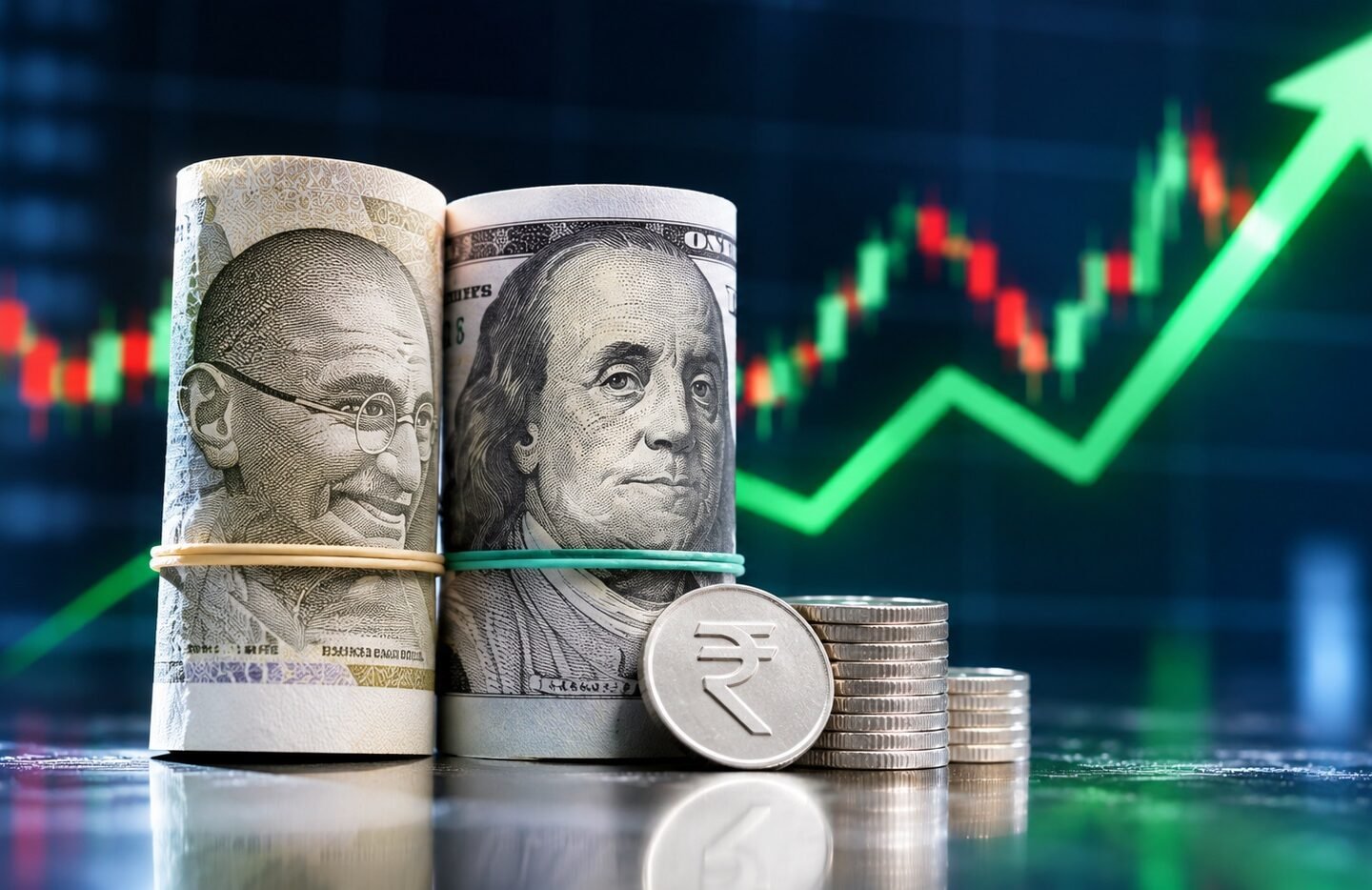



Rupee Strengthens in Early Trade
The Indian rupee gained 12 paise against the US dollar in early trading on Tuesday, November 3, recovering from losses recorded in the previous session. The improvement was supported by foreign institutional investor (FII) inflows into domestic equities and easing crude oil prices.
At the interbank foreign exchange market, the rupee opened at ₹94.68 per dollar and strengthened to ₹94.60 before trading at ₹94.72. This represented a 12-paise appreciation compared with its previous closing level of ₹94.84.
The recovery reflects improving support for the Indian currency as foreign investors return to domestic equities and lower oil prices offer some relief to India’s import bill.
Foreign Investor Inflows Support the Currency
Foreign institutional investors remained net buyers of Indian equities for the second consecutive trading session on Monday. According to exchange data, FIIs purchased shares worth approximately ₹3,114.68 crore on a net basis.
Foreign investment inflows can support the rupee because overseas investors generally need to convert foreign currency into Indian rupees when investing in domestic markets. Increased demand for the local currency can help improve its value against the US dollar.
The latest buying activity has provided some positive momentum to the currency after recent pressure from foreign fund outflows and global market uncertainty.
However, investors will be watching whether foreign buying continues in the coming sessions before treating the latest inflows as a sustained trend.
Lower Crude Oil Prices Provide Additional Relief
Declining crude oil prices also contributed to the rupee’s recovery. Brent crude, the global oil benchmark, was trading around $104.76 per barrel in futures trade during the morning session.
Lower oil prices are generally favourable for India because the country depends heavily on imported crude to meet its energy requirements. When international oil prices decline, India’s import expenditure can ease, potentially reducing demand for US dollars from oil importers.
Market optimism also received support from reports of fresh discussions between Iranian and Qatari officials, which raised hopes of progress towards stabilising energy supplies in West Asia.
If crude prices remain lower, they could help reduce pressure on India’s trade balance and currency.
Strong US Dollar Limits Further Gains
Despite the positive domestic factors, the rupee’s appreciation remained limited by the strength of the US dollar.
The dollar index, which measures the US currency against a basket of six major currencies, was trading at approximately 101.65, up 0.03 per cent.
Investors remained cautious ahead of the crucial US midterm elections scheduled for November 3. Uncertainty surrounding global political and economic developments can increase demand for safe-haven assets, including the US dollar.
This cautious global sentiment has made it difficult for emerging-market currencies, including the Indian rupee, to register stronger gains.
Indian Stock Markets Open Higher
Domestic equity markets also showed positive momentum during early trading on Tuesday.
The BSE Sensex surged 551.77 points, or 0.73 per cent, to reach 76,244.55. Meanwhile, the NSE Nifty 50 advanced 129.60 points, or 0.55 per cent, to 23,570.40.
The rise in domestic equities, combined with renewed foreign investor buying, provided an encouraging signal for market sentiment.
What Could Influence the Rupee in the Coming Sessions?
The rupee’s near-term movement will depend on several domestic and international factors. Continued FII inflows could support the currency, while lower crude oil prices may help ease pressure on India’s foreign exchange requirements.
At the same time, the strength of the US dollar, global geopolitical developments, crude oil price movements and investor sentiment will remain important factors.
Market participants will also monitor developments in West Asia and the outcome of the US midterm elections for clues about the direction of global financial markets.
The latest 12-paise recovery offers some relief for the Indian currency, but its ability to sustain the improvement will depend on whether favourable domestic and global conditions continue.