


Technology News
The rapidly growing artificial intelligence industry has witnessed another interesting development after Instinct, an emerging personal AI assistant, temporarily stopped responding to users on WhatsApp. The disruption created confusion among users, with some suspecting that Meta had blocked the AI service because of its restrictions on third-party AI assistants.
However, Instinct founder Noah Shinn clarified that the interruption was caused by a technical configuration issue on the company’s side that affected payments to one of its service providers.
On November 2, Shinn confirmed that the issue had been resolved and that Instinct’s WhatsApp services were functioning normally again. He also stated that messages sent during the disruption had been received and that the company was contacting users who did not receive responses.
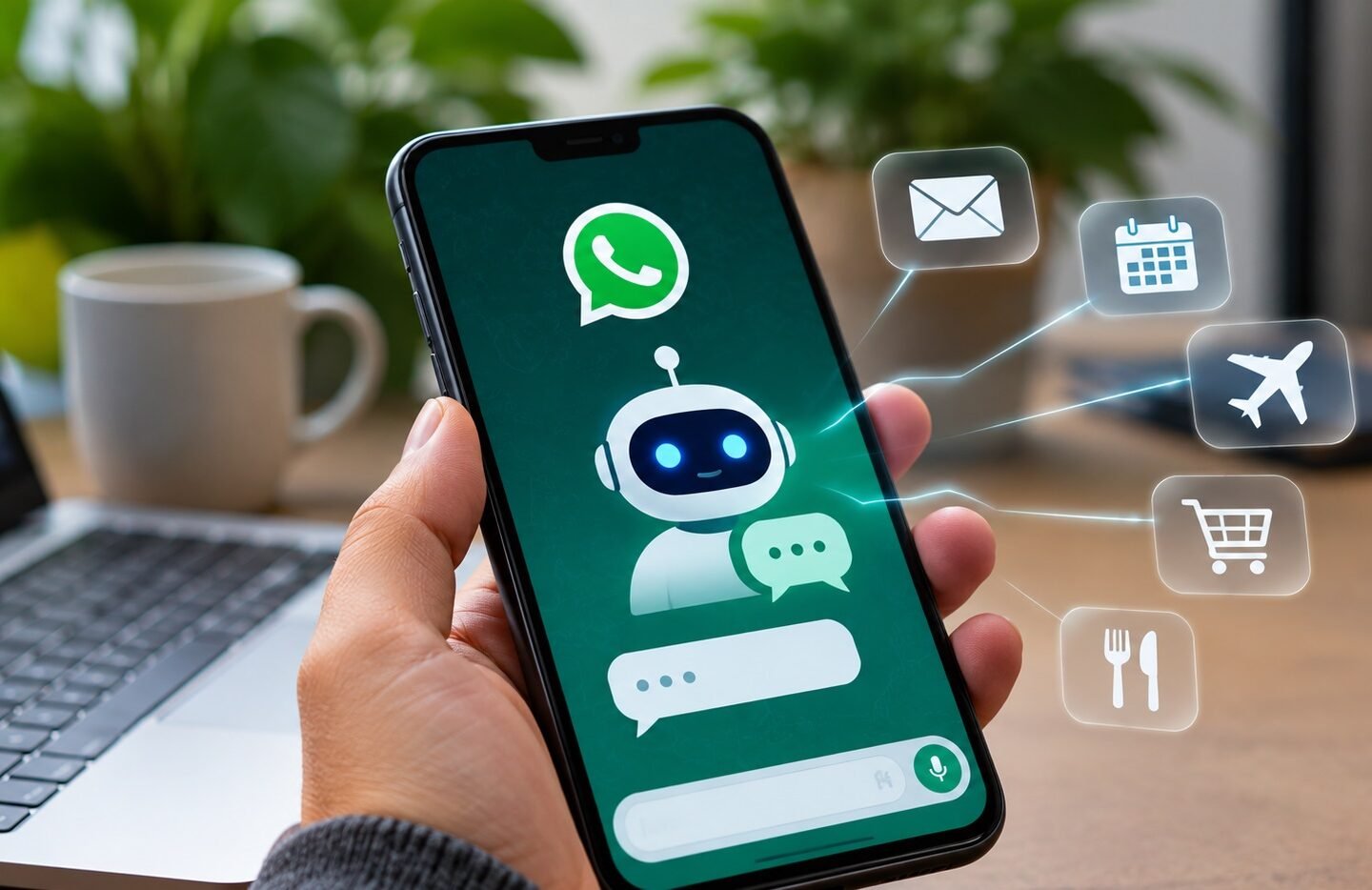
The incident has attracted attention because Instinct is not simply another AI chatbot. It is designed to function as a personal digital assistant capable of managing everyday activities, accessing connected applications and completing tasks through simple messaging instructions.
What Happened to Instinct on WhatsApp?
Instinct users began reporting problems on November 1, when the AI assistant stopped responding to messages through WhatsApp.
Several users shared their experiences on social media, raising concerns about whether the messaging platform had restricted the AI service.
Instinct founder Noah Shinn subsequently explained that a configuration problem had interrupted payments to one of the company’s service providers, preventing the assistant from sending replies through WhatsApp.
In his November 2 update, Shinn confirmed that:
- The technical issue had been resolved.
- WhatsApp messaging services were operating normally.
- Messages received during the disruption had not been lost.
- The company was following up with users who did not receive responses.
- Additional changes were being introduced to prevent similar interruptions.
The clarification helped address speculation that Meta had directly blocked Instinct’s services.
However, separate reports of individual WhatsApp accounts being banned after users signed up for Instinct remain a concern. There is currently no confirmed evidence establishing that these reported account restrictions were directly caused by the outage or Instinct itself.
What Is Instinct AI?
Instinct is an AI-powered personal assistant developed by Spear Street Technology, a San Francisco-based startup founded by Noah Shinn.
Unlike conventional AI chatbots that primarily answer questions, Instinct is designed to perform actions on behalf of users.
It works through familiar communication platforms such as WhatsApp, iMessage and other supported channels. Users can send messages or interact with the assistant through voice calls to delegate everyday tasks.
The platform can connect with applications and personal digital services, including email, messaging, calendars and other information sources.
For example, instead of manually checking multiple applications to organise a meeting, users can ask Instinct to review relevant information, identify available times and help coordinate the arrangements.
Its broader objective is to transform AI from a tool that provides information into a digital assistant that actively helps manage daily responsibilities.
What Can Instinct’s Personal AI Agent Actually Do?
Instinct’s biggest attraction is its ability to handle practical tasks rather than simply generate text.
Some of its important capabilities include:
1. Manage Emails and Important Messages
Instinct can connect to supported email services and help users organise their inboxes.
It can assist with identifying important messages, summarising conversations, finding relevant information and managing email-related tasks.
This can be particularly useful for professionals who receive large volumes of emails every day.
2. Schedule Meetings and Appointments
Users can ask Instinct to help organise their schedules, identify suitable meeting times and coordinate appointments.
By accessing connected calendar information, the assistant can reduce the need to switch between different applications.
3. Book Flights and Plan Travel
Travel management is one of Instinct’s notable use cases.
Users can ask the assistant to search for flights, compare travel options, arrange bookings and organise other travel-related activities.
The platform has attracted considerable attention for its ability to handle travel-related transactions through conversational instructions.
4. Make Reservations and Arrange Transportation
Instinct can help users find restaurants, arrange reservations and schedule transportation.
For example, a user could request assistance in arranging a ride to the airport or finding a suitable restaurant for an upcoming meeting.
The objective is to reduce the number of separate applications and manual steps involved in completing everyday activities.
5. Organise Shopping and Purchases
The assistant can also help with shopping-related activities, including finding products and assisting with purchases.
Instead of independently browsing multiple websites, users can describe what they need and delegate parts of the shopping process to the AI agent.
Any purchase or other consequential action should still be subject to appropriate user permissions and confirmation.
6. Remember Important Information
By accessing supported personal applications and information sources, Instinct can help organise important details and retrieve relevant information when required.
This makes it different from a basic chatbot that only remembers information within an individual conversation.
The more relevant information and application access users provide, the more context the assistant may have when completing tasks.
How Is Instinct Different From Traditional AI Chatbots?
Traditional AI chatbots are primarily designed to answer questions, generate content, explain concepts and assist with problem-solving.
Personal AI agents such as Instinct aim to take the next step by performing actions through connected applications and services.
| Feature | Traditional AI Chatbot | Instinct AI Agent |
|---|---|---|
| Answer questions | Yes | Yes |
| Generate content | Yes | Yes |
| Manage emails | Limited or integration-based | Supported integrations |
| Schedule appointments | Often requires external tools | Can assist directly |
| Plan travel | Provides recommendations | Can assist with bookings |
| Organise information | Conversation-based | Connected personal information |
| Complete tasks | Usually requires manual action | Designed to perform delegated actions |
The key difference is the shift from conversational assistance to task execution.
Instead of asking an AI how to complete a task and doing everything manually, users can delegate parts of the process to an agent.
Why Is Meta Restricting Third-Party AI Assistants on WhatsApp?
The Instinct incident has also brought renewed attention to Meta’s policies governing artificial intelligence services on WhatsApp.
Earlier in 2026, Meta introduced restrictions affecting general-purpose third-party AI chatbots using its WhatsApp Business Platform.
These changes affected competing AI services, including products from OpenAI and Microsoft, which discontinued their WhatsApp assistants in January 2026.
Meta later introduced revised arrangements for third-party AI agents, including paid access conditions. The policy has attracted regulatory scrutiny, particularly in the European Union, where competition authorities have raised concerns about whether Meta’s approach disadvantages competing AI services.
The central issue is competition: WhatsApp is an important communication platform, and restrictions on third-party AI services could influence which companies are able to reach users through it.
Meta also operates its own AI assistant, creating additional questions about equal access and competition between its products and external AI companies.
Instinct vs Meta Muse: The Growing Personal AI Agent Competition
The personal AI assistant market is becoming increasingly competitive, with major technology companies developing systems capable of handling everyday digital activities.
Meta has introduced Muse, its own personal AI agent, while other companies are also investing in similar technologies.
Instinct’s approach focuses on allowing users to delegate activities through familiar messaging platforms.
The competition is increasingly centred on three important capabilities:
- Personalisation: Understanding individual preferences, schedules and information.
- Task execution: Completing real-world digital activities instead of simply providing suggestions.
- Application integration: Connecting different services to create a more unified digital assistant experience.
As these platforms improve, personal AI agents could become an important part of how people interact with their digital devices.
Privacy and Security: Can Users Trust Personal AI Agents?
Despite their convenience, personal AI agents introduce important privacy and security considerations.
To manage emails, calendars, shopping and travel arrangements, an assistant may require access to sensitive personal information.
This creates several potential risks:
Personal data access: Connecting email, calendars and other applications gives an AI agent access to information that users may consider private.
Unauthorised actions: An agent performing purchases, bookings or account-related activities must have clearly defined permissions.
Incorrect information: AI systems can misunderstand instructions, generate inaccurate information or make mistakes while completing tasks.
Account security: Users should understand which applications are connected, what information is accessible and how permissions can be revoked.
Before connecting an AI agent to important personal accounts, users should carefully review its privacy policy, permissions, security practices and transaction approval process.
Convenience should never come at the expense of control over personal information.
What Does Instinct’s WhatsApp Disruption Mean for the Future of AI Agents?
The incident highlights a significant challenge facing the next generation of AI assistants: dependence on external platforms and infrastructure.
Even an advanced AI agent can become temporarily unavailable if its messaging integration, payment systems or third-party service providers experience technical problems.
For companies developing personal AI agents, reliability will be just as important as intelligence.
Users expect their digital assistants to respond consistently, manage important information securely and complete delegated tasks without unnecessary interruptions.
The future of personal AI agents will therefore depend on several factors, including platform compatibility, reliable infrastructure, data protection, user permissions and the ability to complete tasks accurately.
Instinct’s return to WhatsApp demonstrates that the immediate technical issue has been resolved. However, the broader competition over access to messaging platforms and control of AI assistants is likely to remain an important technology industry issue.