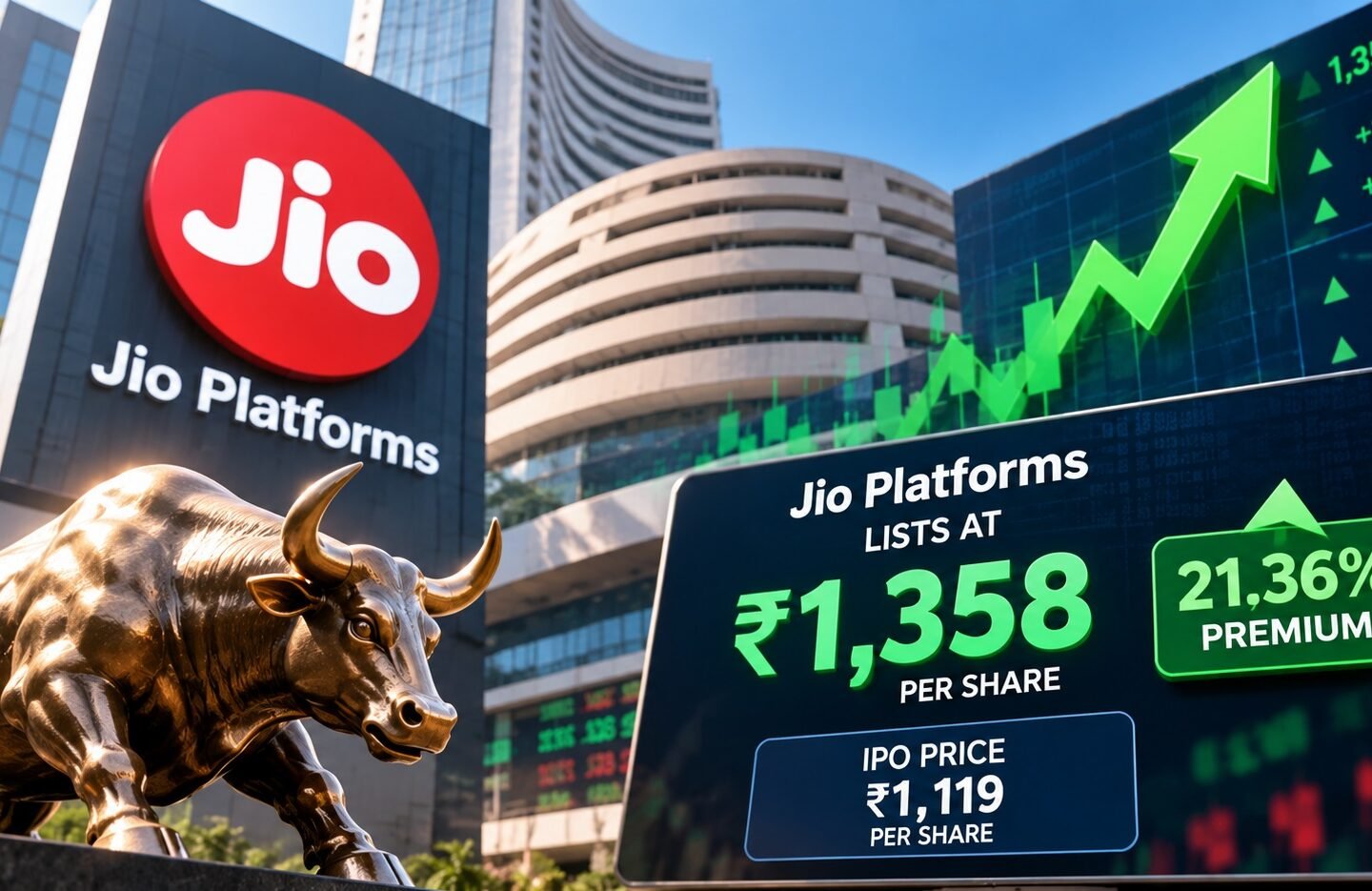


Jio Platforms Ltd, the telecom and digital services arm of Reliance Industries, made a strong debut on the Indian stock market on Wednesday, with its shares listing at ₹1,358 apiece on the National Stock Exchange (NSE) and the Bombay Stock Exchange (BSE). The listing price represented a premium of 21.36% over the initial public offering (IPO) price of ₹1,119 per share.
The listing marks a significant milestone for the company, which has established a major presence in India’s telecommunications and digital services industries. Strong investor demand for the IPO reflected market interest in Jio’s business model, customer base and future growth opportunities.
Jio Platforms IPO Attracts Strong Investor Demand
Jio Platforms’ public offering received substantial interest from investors during its subscription period from October 21 to October 23, 2026. According to published market reports, the IPO was subscribed 22.19 times overall, highlighting strong demand across investor categories.
The company set its IPO price band at ₹1,065 to ₹1,119 per share and ultimately fixed the issue price at the upper end of the range. The public issue raised approximately ₹30,213 crore through a fresh issue of shares.
The strong subscription response and positive listing performance placed Jio Platforms among the most closely watched companies in India’s primary and secondary markets.
Market Capitalisation Reaches Approximately ₹12.5 Lakh Crore
Following its stock market debut, Jio Platforms achieved a market capitalisation of approximately ₹12.5 lakh crore, making it India’s second-most valuable listed company at the time of listing, behind Reliance Industries.
The valuation highlights the growing significance of telecommunications, digital connectivity and technology-enabled services in India’s corporate landscape. It also gives public market investors an opportunity to participate directly in Jio Platforms’ business through exchange-traded shares.
Why Jio Platforms’ Listing Matters
Jio Platforms has played a major role in expanding digital connectivity in India through its telecommunications services and broader digital ecosystem. Its operations and offerings extend beyond mobile connectivity to include broadband, digital entertainment, enterprise solutions and other technology-related services.
The stock market listing provides greater visibility into the company’s valuation and gives investors a new avenue to assess its financial performance, growth strategy and competitive position.
Investors will likely monitor subscriber growth, average revenue per user (ARPU), profitability, capital expenditure and the company’s ability to expand its digital services portfolio.
What Should Investors Watch After the Listing?
Although the strong debut represents a positive start, the listing premium alone does not determine the stock’s long-term performance. Investors will need to assess the company’s financial results, valuation, competitive environment and future business prospects.
Competition in the telecommunications sector, the cost of network expansion, regulatory developments and the pace of monetisation of digital services could influence future performance.
Investors should also remember that share prices can fluctuate significantly after listing as market participants reassess valuations and respond to new information.