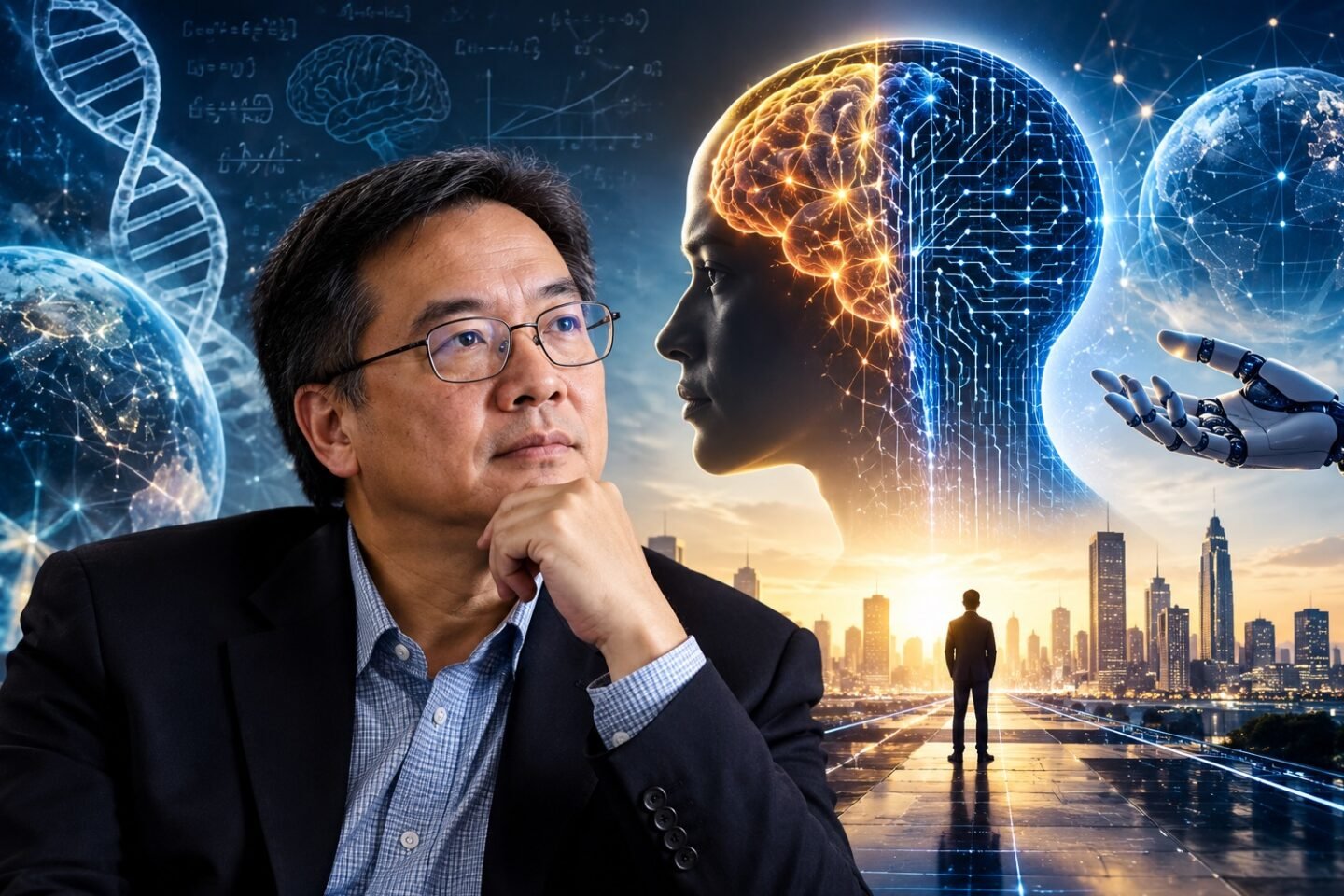


The future of intelligence is rapidly becoming one of the defining questions of the modern era. As artificial intelligence advances alongside breakthroughs in neuroscience and genetics, our understanding of what it means to be intelligent is changing. In an insightful conversation, physicist and computational scientist Steve Hsu explores the forces that could shape the next generation of human and machine intelligence.
Hsu’s perspective highlights that intelligence is far more complex than a single measurable ability. Human cognitive performance is influenced by a combination of genetics, environment, education, and life experiences. As research continues to uncover the biological foundations of intelligence, scientists are gaining new insights into how cognitive abilities develop.
At the same time, artificial intelligence is progressing at remarkable speed. Modern AI systems can process vast amounts of information, recognize complex patterns, generate new ideas, and assist with sophisticated research. According to Hsu’s broader perspective on intelligence, these developments could significantly expand humanity’s ability to solve difficult scientific and technological problems.
The rise of AI also brings important questions about the future of work and education. As machines become capable of handling increasingly complex intellectual tasks, traditional definitions of expertise may evolve. Creativity, critical thinking, adaptability, and the ability to collaborate with intelligent systems could become increasingly valuable.
Perhaps the most important takeaway is that the future of intelligence will not necessarily be a competition between humans and machines. Instead, it may be defined by how biological intelligence and artificial intelligence interact, complement one another, and evolve.
The conversation surrounding Steve Hsu’s ideas ultimately points toward a future filled with both extraordinary possibilities and difficult questions. Understanding intelligence—whether biological or artificial—may become one of the most important scientific and technological challenges of the decades ahead.