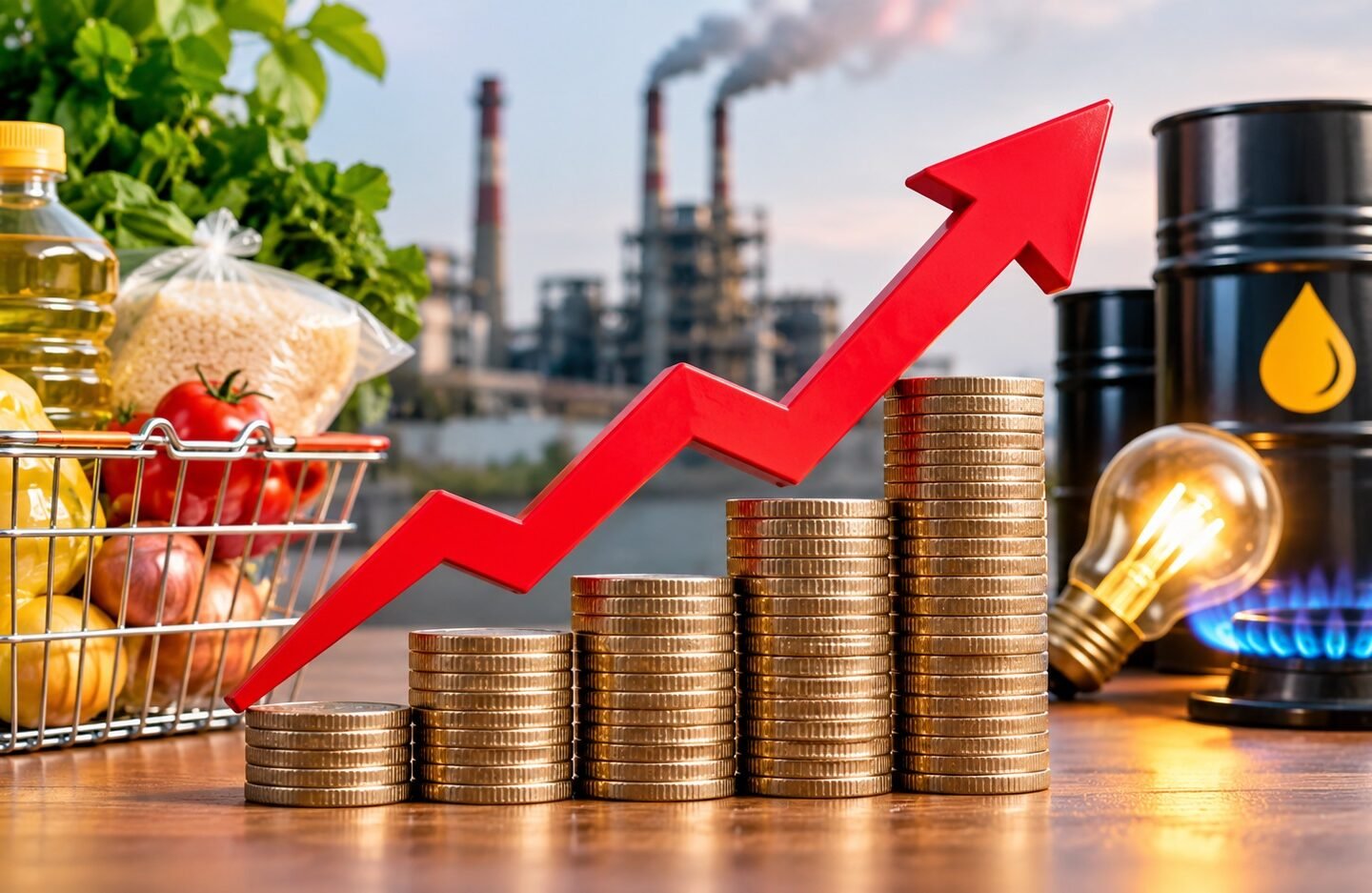



Wholesale Inflation Accelerates in October
India’s wholesale price index (WPI)-based inflation climbed to 12.29% in October 2026, compared with 11.39% in September, according to provisional government data released by the Ministry of Commerce and Industry on November 16.
The latest reading reflects rising prices across several categories, with fuel and power recording the sharpest increase. The overall Wholesale Price Index rose to 113.3 in October from 112.5 in September.
The October figure is the highest recorded under the current WPI series, which uses 2022–23 as its base year. <Cite refs={[“turn611564search0″,”turn611564news11”]}/>
Fuel and Power Prices Drive Inflation
Fuel and power inflation increased sharply to 32.84% in October, compared with 25.85% in September.
The main contributors included:
- Crude petroleum and natural gas: inflation rose to approximately 70.8%.
- Mineral oils: inflation increased to 45.6%.
- Coal: inflation reached 10.5%.
- Electricity: inflation stood at 8.1%.
Higher energy costs can affect transportation, manufacturing, logistics and electricity-intensive industries, potentially increasing operating expenses for businesses. <Cite refs={[“turn611564search2″,”turn611564search0”]}/>
Primary Articles Also Become More Expensive
Inflation in primary articles, which includes food articles, non-food articles, minerals and crude petroleum, increased to 9.24% in October, compared with 8.67% in September.
Within this category, non-food articles recorded inflation of 11.7%, while food articles recorded 8.3%.
The increase indicates that price pressures are not limited to energy products and are also affecting other parts of the wholesale economy. <Cite refs={[“turn611564search2″,”turn611564search0”]}/>
Manufacturing Inflation Shows a Slight Decline
Manufactured products recorded inflation of 9.54% in October, marginally lower than 9.76% in September.
This was the only major WPI category among the three broad groups to register a moderation.
Some manufacturing industries, including food products, textiles, apparel, pharmaceuticals, electrical equipment and motor vehicles, recorded a slowdown in price increases.
However, manufacturing inflation remains elevated, meaning businesses may continue to face pressure from input costs and other operating expenses. <Cite refs={[“turn611564search0″,”turn611564search1”]}/>
Wholesale Inflation and Retail Inflation: What Is the Difference?
Wholesale inflation measures changes in the prices of goods at the wholesale or producer level. Retail inflation, measured through the Consumer Price Index (CPI), tracks price changes faced by households.
India’s retail inflation also increased to 6.09% in October 2026, moving above the Reserve Bank of India’s upper tolerance limit of 6%.
Food inflation under the Consumer Food Price Index reached 8.94%, adding to the pressure on household budgets.
The two indicators measure different stages of the economy, so wholesale inflation does not translate immediately or proportionately into retail prices. <Cite refs={[“turn611564search15″,”turn611564news11”]}/>
What Does Rising Wholesale Inflation Mean for Businesses?
Higher wholesale prices can create challenges for manufacturers, distributors, retailers and service providers.
Businesses may face:
- Increased raw-material procurement costs.
- Higher transportation and logistics expenses.
- Pressure on manufacturing margins.
- More expensive energy and production operations.
- Difficulties in passing higher costs on to customers.
Companies may respond by improving operational efficiency, negotiating supplier contracts or adjusting product prices. The actual impact will depend on the industry and how much of the additional cost businesses can absorb.
Could Rising Inflation Affect RBI Interest Rates?
The increase in both wholesale and retail inflation may influence the Reserve Bank of India’s monetary policy discussions.
The RBI monitors consumer inflation closely when making decisions about interest rates. Persistent price pressures could strengthen expectations of tighter monetary policy, although the final decision will depend on the broader economic outlook, inflation expectations, growth and other risks.
Economists have also pointed to the possibility that wholesale inflation could moderate if crude oil prices remain lower in the coming months. However, geopolitical developments and energy-market uncertainty remain important risks. <Cite refs={[“turn611564search2″,”turn611564news11”]}/>
What to Watch in the Coming Months
The next WPI release will provide an indication of whether the October increase represents a temporary acceleration or a more persistent inflationary trend.
Businesses, investors and policymakers will closely monitor crude oil prices, fuel costs, food prices and manufacturing input expenses.
For now, the October figures highlight the growing importance of energy prices in India’s inflation outlook and the potential impact of higher wholesale costs across the economy.