
Trump and Marcos Discuss Major Trade Agreement
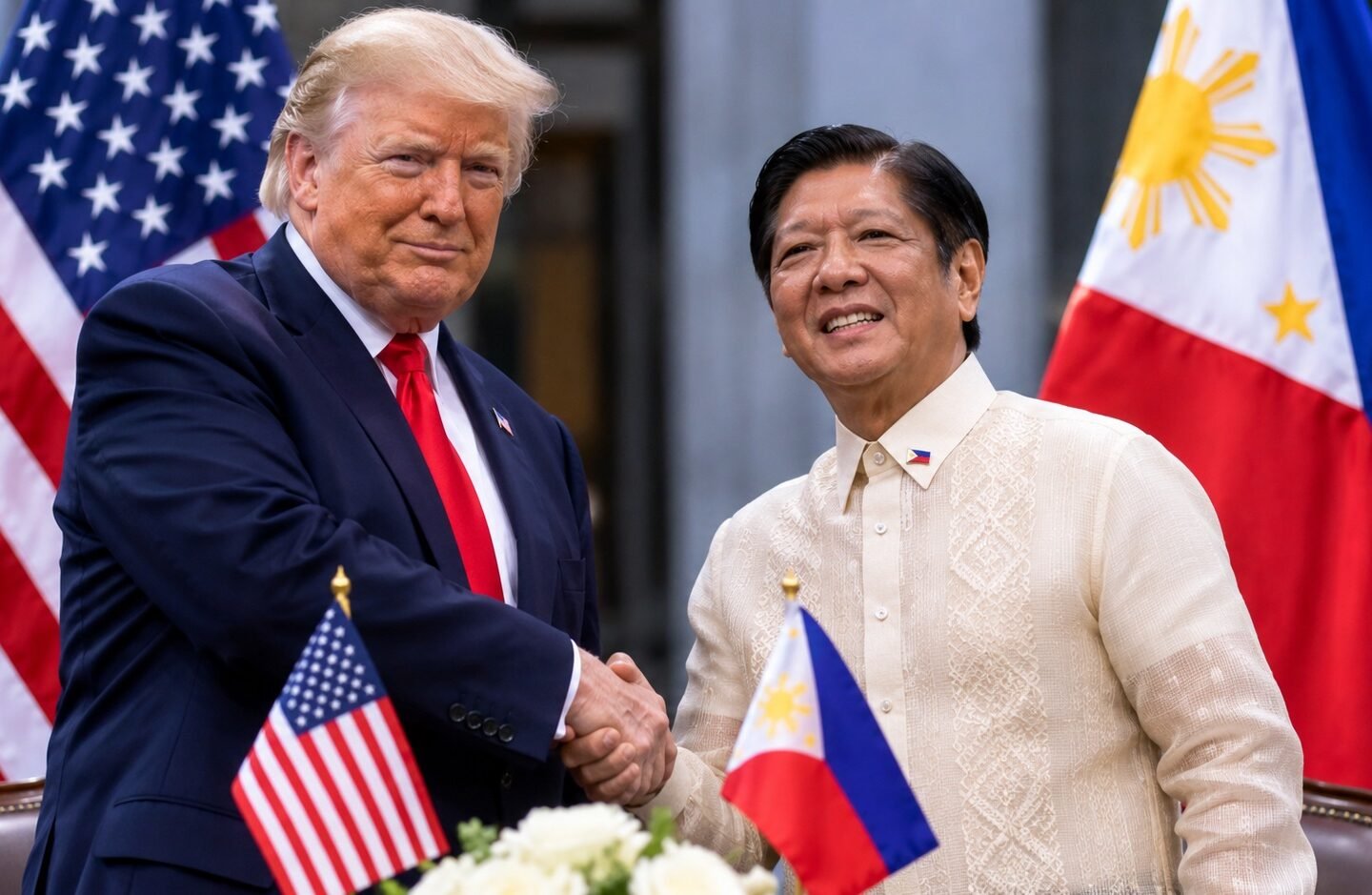
US President Donald Trump announced a major trade agreement with the Philippines during his state visit to Manila on November 18, 2026.
Speaking alongside Philippine President Ferdinand Marcos Jr, Trump described the proposed arrangement as a “magnificent deal” and said it would be fair to both countries.
The announcement forms part of a broader effort to strengthen economic and strategic cooperation between Washington and Manila.
However, the publicly reported announcement provides limited details about specific tariff reductions, market-access commitments and the agreement’s implementation timeline.
Defence Cooperation Gets a Major Boost
Alongside trade discussions, Trump highlighted the expansion of US defence support for the Philippines.
He said Washington had approved more than $5 billion in arms sales to the country.
The development is significant because the Philippines is an important US treaty ally in the Indo-Pacific region, particularly amid continuing tensions in the South China Sea.
The two governments are seeking to strengthen military cooperation and improve their ability to respond to regional security challenges.
US and Philippines Explore Nuclear Energy Cooperation
Another important area discussed during the visit was civilian nuclear energy.
Trump indicated that the United States could work with the Philippines on a major nuclear energy project using American technology.
The proposal could support the Philippines’ long-term efforts to diversify its electricity supply and explore additional sources of reliable power.
However, the announcement represents an area of potential cooperation rather than confirmation that a nuclear power plant project has received final approval.
Alaska Natural Gas Project Also on the Agenda
Energy cooperation could extend beyond nuclear power.
Trump said the Philippines could become a potential partner in a planned US natural gas export project in Alaska.
He described the Philippines as a natural partner for the initiative and confirmed that discussions were underway.
If developed, such cooperation could create opportunities for energy trade, infrastructure investment and stronger commercial ties between the two countries.
Why the Agreement Matters for Both Countries
The proposed trade arrangement could create opportunities for businesses in both economies.
For the United States, stronger trade relations with the Philippines could expand access to Southeast Asian markets and support American exporters.
For the Philippines, closer economic cooperation could encourage investment, improve access to technology and strengthen its energy infrastructure.
The broader partnership could also help Washington maintain its economic presence in a region where competition for trade, investment and strategic influence remains significant.
Trump’s Wider Asia-Pacific Trade Strategy
The Philippines visit is part of Trump’s wider engagement with Asian economies.
During the same regional trip, Trump also signed a joint trade statement with Thailand’s Prime Minister Anutin Charnvirakul on November 17.
That separate US-Thailand arrangement included proposed tariff reductions and additional purchases of American agricultural products.
The Thailand statement and the Philippines announcement are separate developments and should not be confused with one another.
Trump is also scheduled to travel to China for the APEC summit, where trade, technology and regional security are expected to remain important issues.
What Happens Next?
The next stage will depend on the detailed terms negotiated by the two governments.
Businesses and investors will be watching for clarity on tariff arrangements, trade access, defence cooperation and proposed energy projects.
While Trump’s announcement signals an intention to deepen US-Philippines relations, the full economic impact will depend on the formal agreements, approvals and implementation measures that follow.
The developments could mark an important step in the relationship between the two countries, extending cooperation beyond traditional trade into defence, energy and strategic investment.