

Tesla and SpaceX Consider a Historic Merger
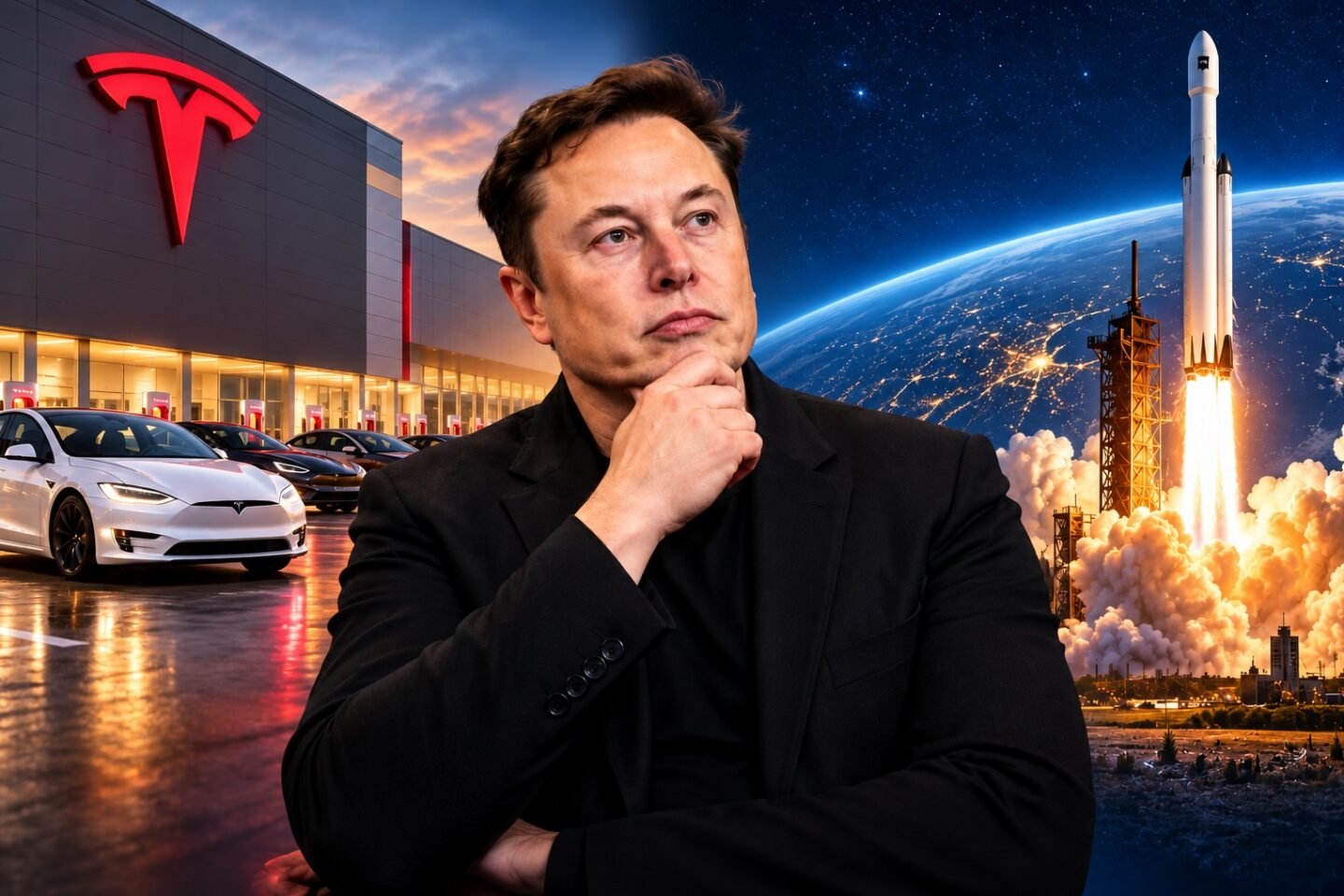
Elon Musk has revealed that his two major companies, Tesla and SpaceX, are considering a potential merger that could reshape the global technology, automotive, artificial intelligence and space industries.
Speaking during SpaceX’s third-quarter earnings call, Musk said that both companies had established special committees of independent directors to examine the proposal. The discussions follow growing speculation about a possible combination of the electric vehicle manufacturer and the aerospace company.
Musk expressed support for the idea but cautioned investors against assuming that a merger would definitely happen. He also highlighted the importance of shareholder approval and explained that he would not participate directly in the committees’ discussions because of his potential conflict of interest.
Why Would Tesla and SpaceX Merge?
A potential merger could bring together Tesla’s expertise in electric vehicles, battery technology, autonomous driving and robotics with SpaceX’s capabilities in rocket launches, satellite communications and space infrastructure.
Artificial intelligence is another major factor behind the discussions. Both companies are investing in advanced computing, chip development and robotics, creating opportunities for closer collaboration.
Musk has pointed to several areas where the businesses could benefit from working together, including AI software, semiconductor design, robotics and connectivity. Their joint Terafab chip-manufacturing initiative is one example of their growing technological overlap.
A combined organisation could potentially coordinate research, manufacturing and investment across these interconnected sectors more efficiently.
Could the Merger Create a $3.5 Trillion Company?
A Tesla-SpaceX merger could create one of the world’s most valuable corporate groups. Industry reports have estimated the combined market value at approximately $3.5 trillion, based on the companies’ reported valuations around the time of the announcement.
The proposed combination would bring together businesses operating across electric mobility, energy storage, satellite internet, aerospace, artificial intelligence and advanced manufacturing.
For investors, the potential attraction lies in gaining exposure to a broader technology ecosystem. Tesla shareholders could gain access to SpaceX’s launch and Starlink satellite businesses, while SpaceX investors could benefit from Tesla’s automotive, energy and robotics operations.
However, the estimated combined valuation is not a confirmed deal value. The final financial structure, if a merger proceeds, would depend on negotiations and the terms presented to shareholders.
Shareholder Approval Remains a Major Hurdle
Despite Musk’s positive comments, the proposed merger faces significant challenges. The independent committees must evaluate the transaction, and shareholders would need to support the deal under the applicable approval requirements.
Musk has indicated that approval from Tesla shareholders could be particularly challenging, describing the requirement for support from at least 50% of shareholders as a high hurdle.
The companies must also consider corporate governance, valuation, regulatory scrutiny and the practical challenges of integrating businesses with different operations and risk profiles.
Because SpaceX operates in strategically sensitive aerospace and defence-related markets, a combination involving Tesla could attract additional regulatory attention.
What Could the Merger Mean for the Future of AI and Robotics?
One of the biggest potential implications is the opportunity to connect artificial intelligence with real-world machines and infrastructure.
Tesla is developing autonomous driving technology and humanoid robots, while SpaceX is expanding its capabilities in satellite connectivity, launch systems and computing infrastructure. Closer integration could help both companies coordinate their long-term technology development.
The companies may also be able to share expertise in manufacturing automation, energy systems and advanced chips. Nevertheless, these potential benefits would depend on the final structure of any agreement and how effectively the businesses work together.