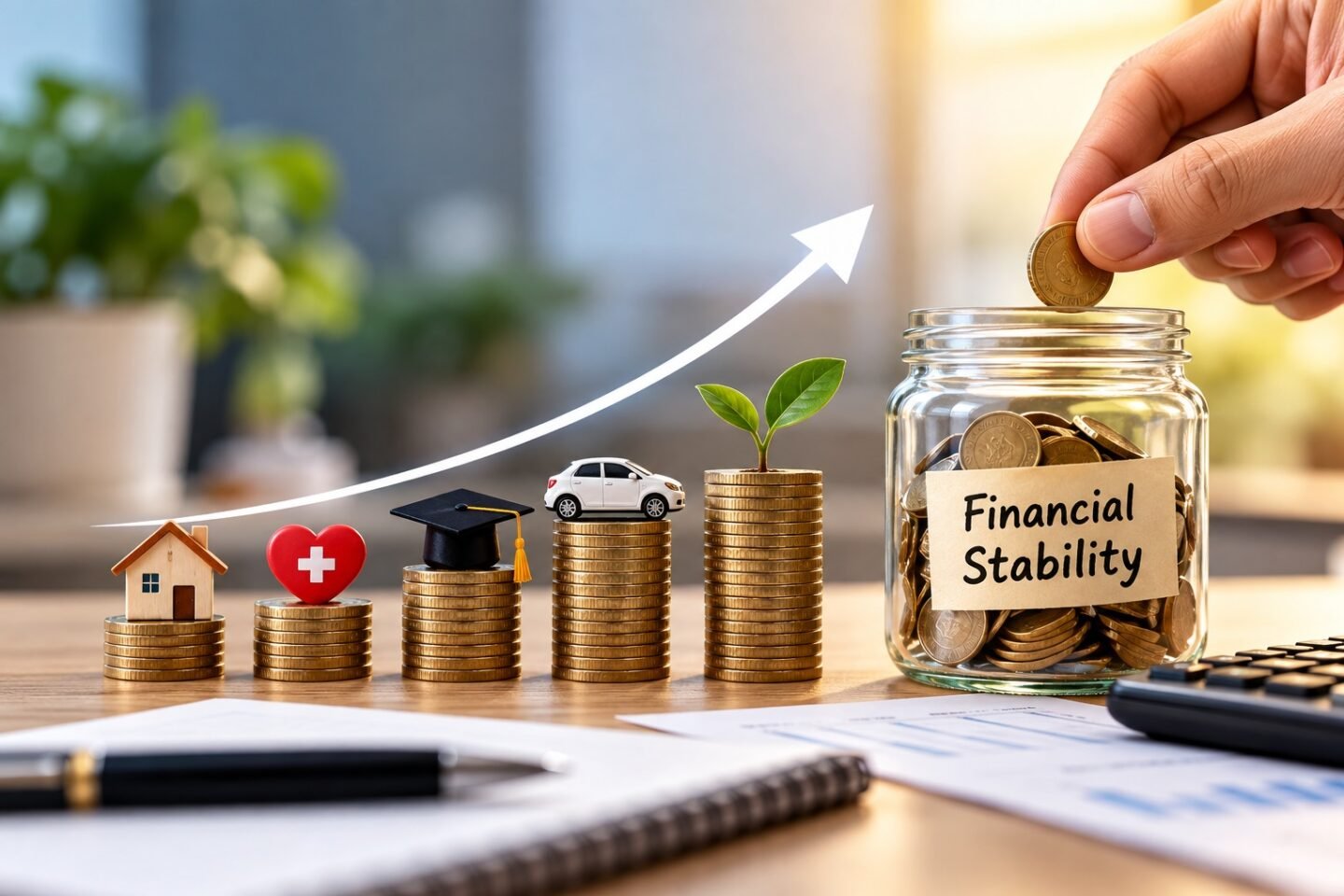



Financial stability is not simply about how much money you earn. It is about how effectively you manage your income, expenses, savings, debt, and financial goals. A person with a moderate income can be financially stable with disciplined money management, while someone earning significantly more may still struggle if spending and debt are poorly controlled.
What Is Financial Stability?
Financial stability means having enough financial control and resilience to handle everyday expenses as well as unexpected situations. It gives you the confidence that a sudden medical bill, job change, emergency repair, or other unexpected expense will not immediately put your finances under severe pressure.
At its core, financial stability depends on the relationship between money coming in and money going out.
When income consistently exceeds essential expenses and you have savings for emergencies and future goals, your financial position generally becomes stronger.
How Is Financial Stability Related to Your Money?
1. Income Creates Your Financial Foundation
Your salary, business income, investments, or other earnings provide the foundation for your financial plan.
However, higher income does not automatically mean greater financial stability. What matters is how much of that income remains after necessary expenses, taxes, debt payments, and regular spending.
For example, someone earning ₹60,000 per month and saving ₹15,000 may have greater financial flexibility than someone earning ₹1 lakh but spending almost the entire amount.
2. Spending Habits Direct Your Financial Future
Your spending decisions have a direct impact on financial stability.
Regularly spending more than you earn can lead to increasing credit-card balances, loans, and financial stress. On the other hand, tracking expenses and distinguishing between needs and wants can help create room for savings.
A simple monthly budget can show where your money is going and help identify unnecessary expenses.
3. Emergency Savings Provide Protection
Unexpected expenses are one of the biggest threats to financial stability.
An emergency fund can help cover expenses such as:
- Medical emergencies
- Temporary loss of income
- Major household repairs
- Vehicle repairs
- Unexpected family expenses
Building an emergency fund gradually can reduce the need to depend on high-interest loans or credit cards when something unexpected happens.
4. Debt Can Affect Financial Stability
Not all debt is necessarily harmful, but excessive or expensive debt can put significant pressure on your monthly cash flow.
High-interest credit-card debt and multiple personal loans can make it harder to save and invest. Managing debt responsibly means understanding the interest rate, repayment period, and total cost before taking on a loan.
A financially stable approach focuses on keeping debt manageable relative to income.
5. Savings Turn Income Into Financial Security
Saving money gives your income a longer-term purpose.
Instead of using every rupee earned for immediate consumption, savings can help you prepare for future goals such as buying a home, education, starting a business, retirement, or major purchases.
Even small, consistent savings can become meaningful over time because of compounding.
Financial Stability Is More Than Having Money
A large bank balance alone does not guarantee financial stability. True financial stability involves several factors working together:
Stable income + controlled expenses + emergency savings + manageable debt + long-term investments = stronger financial resilience
It also means having a financial plan that can adapt when circumstances change.
How to Improve Your Financial Stability
Start with a clear picture of your current financial situation. Calculate your monthly income and essential expenses, review your debts, and determine how much you can realistically save.
Then consider these steps:
- Create a realistic monthly budget.
- Build an emergency fund gradually.
- Pay down high-interest debt.
- Automate regular savings.
- Avoid unnecessary lifestyle inflation.
- Invest according to your goals and risk tolerance.
- Review your finances regularly.