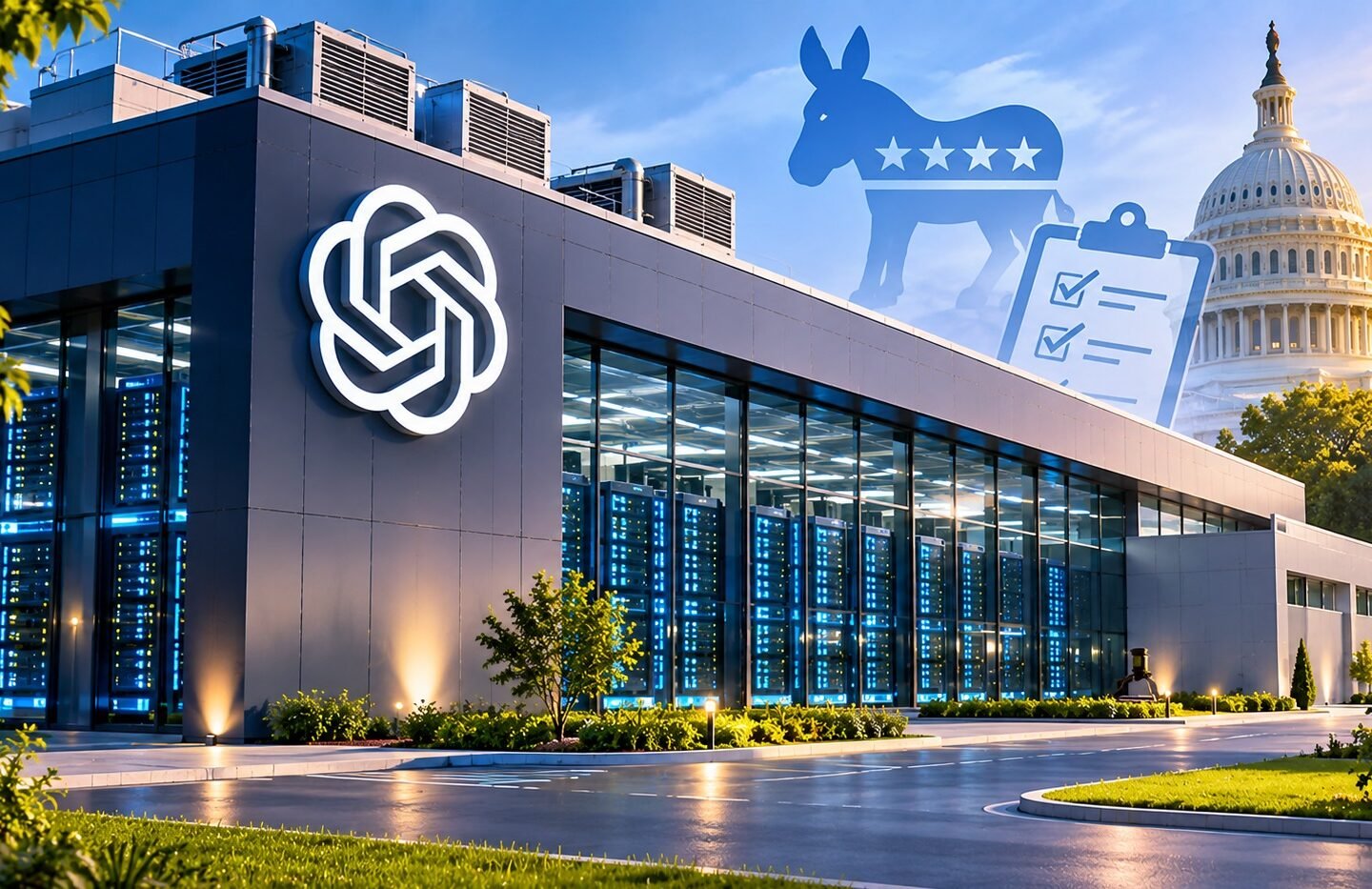



OpenAI Refuses to Slow Data Centre Expansion Despite US Midterm Election Backlash
OpenAI Remains Committed to Its Data Centre Expansion Plans
OpenAI is moving ahead with its ambitious data centre expansion strategy despite growing political opposition following the 2026 US midterm elections.
The company’s Chief Financial Officer, Sarah Friar, told CNBC on Friday, November 6, that OpenAI would continue investing in computing infrastructure to meet increasing customer demand for artificial intelligence services.
Friar emphasised that the company needs to maintain its infrastructure investments and strengthen relationships with communities where future data centres may be developed.
Her comments come after Democratic candidates made tighter oversight of large data centres an important part of their election campaigns. The results have raised concerns across the technology industry that new regulations could increase construction costs and delay major AI infrastructure projects.
Midterm Election Results Increase Pressure on AI Companies
The 2026 US midterm elections delivered significant gains for Democrats, including victories in states that have become important locations for data centre development.
Several successful candidates campaigned on stronger restrictions, greater public involvement and closer examination of the environmental and economic impact of large computing facilities.
Data centres have increasingly become a controversial issue because of their substantial electricity requirements, water consumption and potential effects on local infrastructure.
Residents in several communities have expressed concerns that rapid expansion could increase household electricity bills, place pressure on water supplies and create environmental challenges.
The election results have therefore raised questions about whether technology companies will face a more demanding regulatory environment as they attempt to expand their AI infrastructure.
Sarah Friar Says Customer Demand Will Drive Continued Investment
Speaking to CNBC, Friar said OpenAI must continue finding ways to invest in infrastructure to serve its growing customer base.
She indicated that the company would continue raising capital and working with major cloud infrastructure partners to secure the computing resources needed for its AI operations.
Friar also highlighted strong business momentum, saying OpenAI’s business grew approximately 70% quarter over quarter in the third quarter of 2026, while enterprise demand doubled during the same period.
According to her, this growth demonstrates that businesses and consumers are increasingly using AI products and receiving value from them.
The comments suggest that OpenAI views infrastructure expansion as essential to supporting future products, enterprise adoption and more advanced AI systems.
OpenAI Introduces Measures to Address Community Concerns
Just one day before Friar’s comments, OpenAI announced a new set of commitments designed to improve relationships with communities hosting its future computing facilities.
The company introduced its National Community Compact and Compute Campus Policy Blueprint on November 5.
Under these initiatives, OpenAI made several commitments:
- Pay electricity costs: Cover the full cost of electricity consumed by its future computing campuses.
- Fund supporting infrastructure: Pay for the additional power infrastructure required to serve its facilities.
- Improve transparency: Share construction plans and information about potential effects on surrounding communities.
- Disclose resource consumption: Publish site-level electricity and water usage.
- Reduce water consumption: Prioritise more efficient cooling technologies.
- Support local employment: Work with unions, educational institutions and training providers to create employment opportunities.
- Protect electricity customers: Provide financial assurances so other consumers are not left covering costs if projects are delayed, reduced or cancelled.
OpenAI also said it would stop using non-disclosure agreements with public officials when discussing or negotiating future data centre locations, subject to limited protections for sensitive information and legitimate security requirements.
The company hopes these steps will improve public trust and make future infrastructure projects easier to develop.
Data Centre Expansion Faces Growing Political and Financial Risks
The growing opposition to AI data centres has already affected investor sentiment.
Following the Democratic election gains, shares of several data centre operators, utilities and infrastructure companies declined as investors considered the possibility of stricter regulations and higher operating costs.
Reuters reported that approximately $2.5 trillion in US stock market value was wiped out on Thursday as investors reassessed the potential impact of the election results and concerns surrounding the AI infrastructure spending boom.
Companies involved in data centre construction, semiconductor manufacturing, cloud computing and electricity generation could all be affected if projects become more expensive or face longer approval processes.
However, analysts do not necessarily expect infrastructure development to stop. Instead, companies may have to accept greater financial responsibilities and more extensive community consultation.
Other Technology Giants Continue Investing in AI Infrastructure
OpenAI is not alone in pursuing large-scale data centre expansion.
Google announced plans to invest $17 billion in building its first data centre in Wyoming, highlighting that major technology companies remain committed to increasing computing capacity.
ByteDance is also reportedly considering expanding a data centre project in northeastern Brazil.
These developments indicate that demand for AI infrastructure remains strong despite growing concerns about energy consumption, environmental impact and financial returns.
The competition to secure advanced computing resources continues to influence investment decisions across the technology sector.
OpenAI’s Fundraising Plans Remain Important
Continued infrastructure expansion will require substantial financial resources.
Friar said OpenAI was continuing to raise fresh capital, pushing back against suggestions that the company had reduced its fundraising ambitions amid market volatility.
The company is relying on its partnerships with major cloud providers and investors to support the development of additional computing capacity.
The challenge will be to balance its infrastructure spending with the need to generate sustainable business returns.
Investors are increasingly examining whether the revenue generated by AI products can justify the enormous cost of building and operating data centres.
The Future of AI Infrastructure Will Depend on Community Support
OpenAI’s decision to continue expanding its data centre network demonstrates that the company sees computing capacity as essential to its long-term growth.
However, the political environment surrounding AI infrastructure is changing. Local communities and elected officials are demanding greater transparency, stronger environmental protections and assurances that households will not bear the financial burden of data centre expansion.
OpenAI’s latest commitments represent an effort to address these concerns without slowing its investment plans.
The company’s ability to secure new locations, raise capital and maintain public support will be important as it competes to build the infrastructure required for increasingly powerful AI systems.
The broader AI industry may continue expanding, but future data centre projects are likely to face closer scrutiny from governments, investors and the communities where they are built.