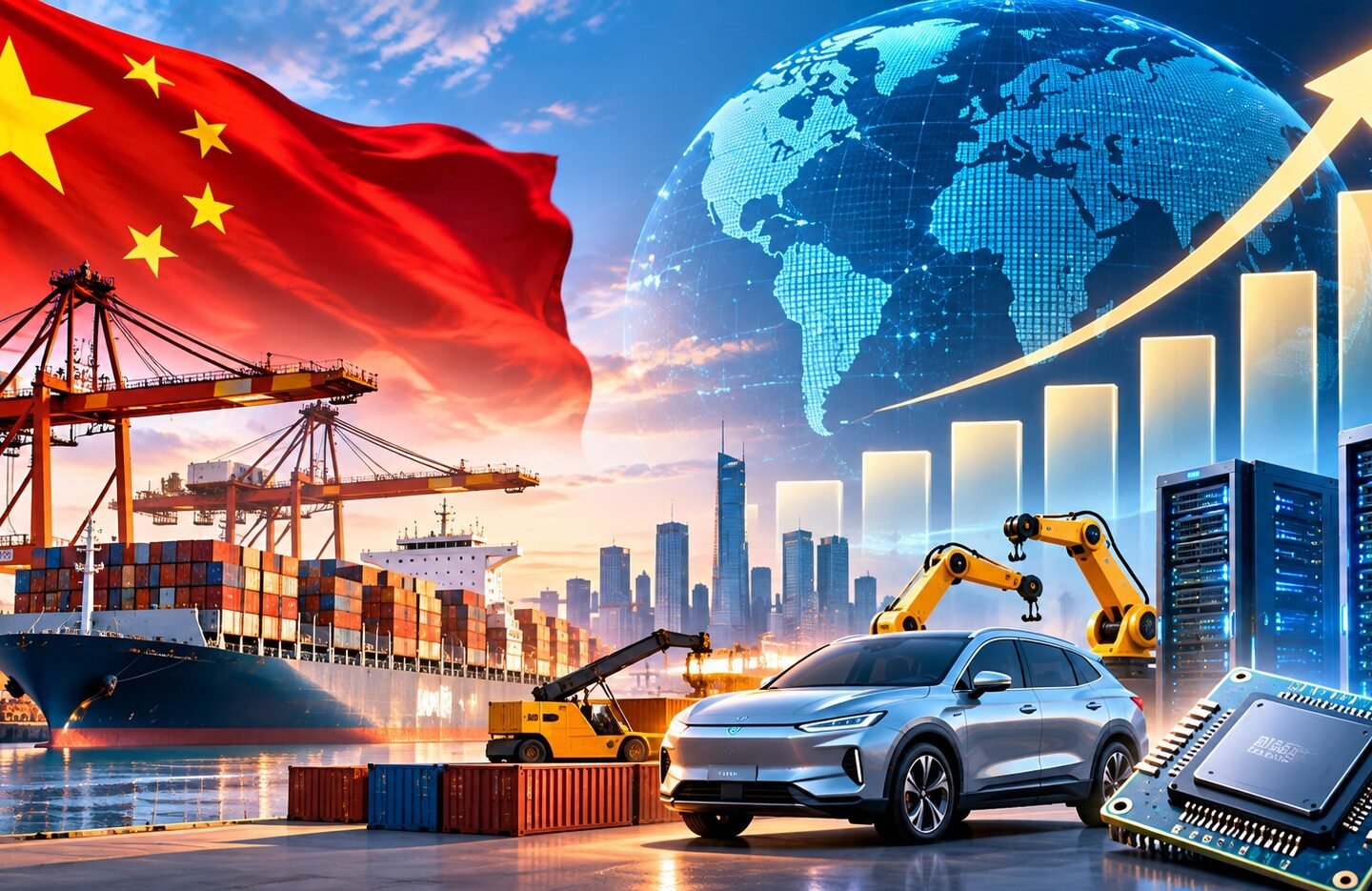



China has recorded a trade surplus exceeding $1 trillion for the second consecutive year, highlighting the strength of its manufacturing and export industries despite weak domestic demand and increasing international trade tensions.
According to customs data released on November 10, 2026, China’s goods trade surplus reached approximately $1.04 trillion between January and October. The milestone was achieved a month earlier than in 2025, putting the country on track to surpass last year’s record of approximately $1.2 trillion.
The latest figures underline China’s growing role in global technology supply chains, particularly as worldwide investment in artificial intelligence infrastructure drives demand for chips, servers, networking equipment and other advanced products.
China’s October Exports Jump 35.2%
China’s exports increased by 35.2% year-on-year in October, reaching approximately $412.3 billion in value.
The growth exceeded economists’ expectations of 33.5%, although it was slightly below September’s 36.3% increase.
Imports also recorded significant growth, rising 41.6% year-on-year to approximately $307.1 billion. This was substantially higher than the 32% increase forecast by economists.
Despite faster import growth, China maintained a monthly trade surplus of approximately $105.3 billion in October, down from $133.5 billion in September.
AI Boom Drives Demand for Chinese Technology Products
One of the major factors supporting China’s export performance is the global expansion of artificial intelligence infrastructure.
Technology companies are investing heavily in data centres, advanced computing systems and digital infrastructure. This is creating demand for products manufactured in China, including:
- Semiconductors and electronic components
- Data centre servers and networking equipment
- Electric vehicles and automotive components
- Industrial machinery and robotics
- Batteries and advanced technology products
The growing AI ecosystem has provided an important boost to Chinese manufacturers, helping them reach international customers even as demand in some traditional industries remains uneven.
Weak Domestic Demand Increases Reliance on Exports
Despite strong international sales, China’s domestic economy continues to face challenges.
Weak consumer spending, pressure in the property sector and subdued business confidence have affected internal demand. As a result, manufacturers are increasingly depending on overseas markets to maintain production and support economic growth.
The growing difference between exports and imports has raised concerns among economists about the sustainability of China’s economic expansion.
Some analysts warn that excess industrial capacity and intense price competition could encourage Chinese manufacturers to sell more products internationally, potentially putting pressure on businesses in other economies.
Growing Trade Tensions With the US and European Union
China’s expanding trade surplus is likely to intensify discussions about global trade imbalances.
The United States and European Union have raised concerns about the competitiveness of Chinese products and their impact on domestic manufacturing industries.
European policymakers have been considering measures to protect local manufacturers, particularly in the automotive and technology sectors. Meanwhile, trade restrictions and tariffs remain important uncertainties for Chinese exporters.
The latest figures also arrive ahead of expected discussions between US President Donald Trump and Chinese President Xi Jinping at the Asia-Pacific Economic Cooperation summit later this month.
Trade policy, tariffs and market access are likely to remain important subjects in relations between the two economies.
Can China Maintain Its $1.2 Trillion Trade Surplus Record?
China’s strong export performance puts it on course to exceed its 2025 trade surplus of approximately $1.2 trillion.
However, several factors could influence the outlook, including global demand for AI hardware, international trade restrictions, semiconductor supply chains and the health of major consumer markets.
A slowdown in AI infrastructure investment could affect demand for electronics and related equipment. Additional tariffs or restrictions from major trading partners could also create challenges for Chinese manufacturers.
For now, the latest customs figures demonstrate the strength of China’s export sector. However, the country’s longer-term economic outlook will also depend on improving domestic consumption and achieving a more balanced relationship between exports and imports.