

Airlines Shift Focus Towards High-Spending Travellers
The global airline industry is increasingly turning towards premium travel as rising fuel prices and operating expenses put pressure on profitability.
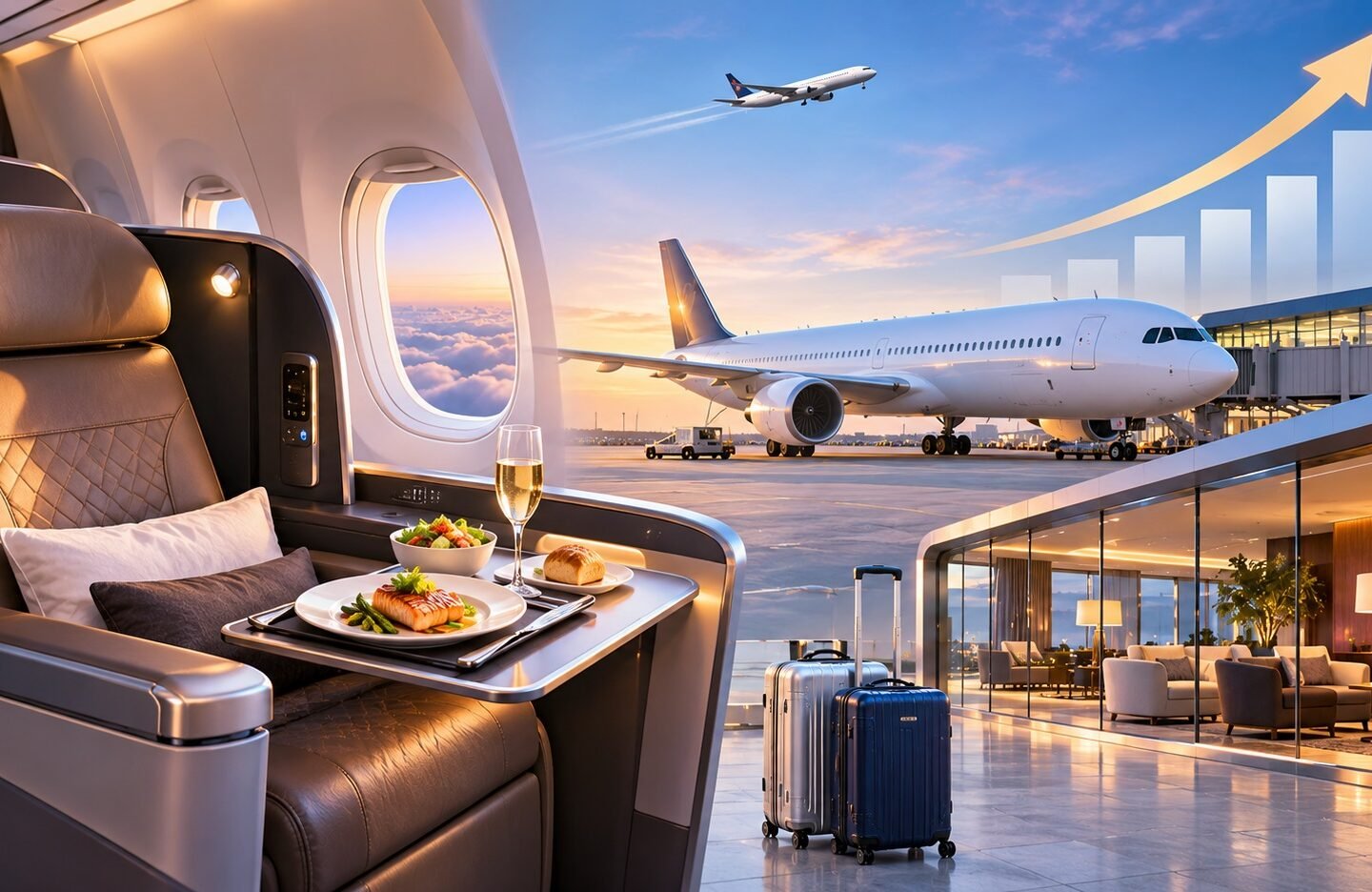
Major carriers are investing in upgraded business-class cabins, spacious seating, premium dining, exclusive airport lounges and personalised passenger services. The strategy is designed to attract travellers willing to pay more for comfort and convenience, helping airlines generate higher revenue without relying entirely on increasing passenger numbers.
According to an AFP report published on November 8, 2026, airlines are accelerating their premium offerings as the cost of operating flights rises. The shift reflects a broader change in the aviation business, where generating more revenue from each passenger is becoming increasingly important.
Rising Jet Fuel Prices Put Pressure on Airline Profits
Fuel is one of the largest operating expenses for airlines. The recent increase in international jet fuel prices has created additional financial pressure, even as demand for air travel remains relatively strong.
The rise in fuel costs has been linked to geopolitical tensions and disruptions affecting global energy supplies.
Higher fuel expenses can quickly reduce airline margins because carriers cannot always pass the entire increase on to passengers without risking weaker demand.
Several major US airlines, including Delta Air Lines, United Airlines and American Airlines, have faced pressure on their earnings outlook despite reporting stronger passenger revenues.
This environment is encouraging airlines to focus on higher-yield passengers and services that can generate additional income.
Premium Cabins Offer Higher Revenue Opportunities
Premium seating is becoming an increasingly important part of airline revenue strategies.
Business-class seats occupy considerably more cabin space than standard economy seats, but airlines can charge several times more for them.
According to aviation economics professor Volodymyr Bilotka, business-class seats can occupy the space of approximately four economy seats while being priced five or six times higher.
This creates an opportunity for airlines to improve revenue from limited aircraft capacity.
American Airlines reported that premium revenue increased 18.5% year over year in its latest quarter. The company also indicated that premium products generated roughly half of its ticket revenue while accounting for approximately 30% of its seats.
These figures demonstrate why airlines are increasingly prioritising premium passengers as they look for ways to protect profitability.
Airlines Introduce More Luxury Travel Experiences
Airlines are no longer limiting premium travel to traditional first-class and business-class cabins. They are introducing additional options that allow passengers to pay for specific benefits.
Some of the latest developments include:
- More spacious seating: Premium economy and extra-legroom options are attracting passengers who want additional comfort without paying for business class.
- Luxury dining: Airlines are partnering with renowned chefs and food specialists to improve onboard menus.
- Exclusive airport lounges: Upgraded lounges offer premium dining, comfortable seating, workspaces and relaxation facilities.
- Enhanced entertainment: Larger screens and improved onboard connectivity are becoming important parts of premium experiences.
- Personalised services: Passengers can access additional flexibility, priority services and tailored travel options.
These upgrades allow airlines to generate additional revenue from customers who may not necessarily purchase the most expensive cabin.
United, JetBlue and Delta Expand Premium Offerings
Several major airlines are investing heavily in premium travel products.
United Airlines is expanding its premium seating options and plans to introduce a new Economy Plus configuration that allows passengers to avoid having another traveller in the middle seat on selected flights. The service is expected to begin towards the end of 2026.
JetBlue Airways announced its BlueFirst first-class service for domestic routes in September, reflecting its ambition to compete more aggressively for premium travellers.
Delta Air Lines continues to invest in its Delta One luxury experience, including upgraded meals, premium wines, larger entertainment screens and improved seating. The airline has also worked with well-known chefs and wine specialists to enhance its onboard service.
These developments show how airlines are competing through the overall passenger experience rather than relying exclusively on traditional cabin categories.
Premium Seats Are Growing Faster Than Economy Capacity
The shift towards premium travel is visible in airline capacity trends.
According to aviation data cited by AFP, the number of premium seats on US flights has increased by 33% since 2020, more than twice the growth rate of main-cabin seats.
United Airlines has more than doubled its premium-seat capacity between 2015 and 2026.
Data from consultancy Cirium also indicates that premium seats across 42 airlines belonging to the three major global airline alliances, along with Middle Eastern carriers, represented approximately 19% of total seating capacity. That compares with 17.1% in 2019.
Some airlines believe premium seating could eventually represent as much as 70% of passengers on selected flights, although this remains an industry ambition rather than a universal cabin configuration.
Can Premium Travel Protect Airlines From Higher Fuel Costs?
Premium travel can help airlines improve revenue per passenger, but it does not completely eliminate the financial pressure caused by higher fuel prices.
Aircraft operating expenses include fuel, maintenance, crew salaries, airport charges, aircraft leasing and other costs. Premium cabins also require investment in seating, service, catering and airport facilities.
There is another potential risk: if too many airlines expand premium capacity at the same time, competition could increase and put pressure on premium ticket prices.
Airlines must therefore balance the number of premium seats they introduce with actual passenger demand.
A successful strategy will depend on attracting enough high-spending customers to justify the additional investment.
Could Budget Airlines Find a New Opportunity?
The industry’s growing focus on affluent travellers could create opportunities for low-cost airlines.
If traditional carriers increasingly prioritise premium passengers and raise fares, budget airlines may be able to attract price-sensitive customers looking for affordable travel.
However, higher fuel costs are affecting the entire aviation sector. Low-cost carriers often have fewer opportunities to offset rising expenses through premium services, making cost management particularly important.
The future competitive landscape may therefore depend on how effectively airlines balance affordability, comfort and profitability.
The Future of Air Travel May Be More Premium
The airline industry’s growing investment in premium travel reflects a major shift in its business model.
For years, airlines focused heavily on increasing passenger numbers, improving aircraft utilisation and filling available seats. Today, many carriers are placing greater emphasis on earning more from each traveller.
Higher fuel costs, changing passenger expectations and competition for affluent customers are accelerating this transition.
Premium economy, business class, luxury lounges and personalised onboard experiences are likely to become increasingly important sources of revenue.
However, airlines will need to ensure that higher fares and premium investments do not push too many ordinary travellers away from air travel.
The long-term winners may be carriers that can offer attractive premium experiences while maintaining efficient operations and competitive pricing.